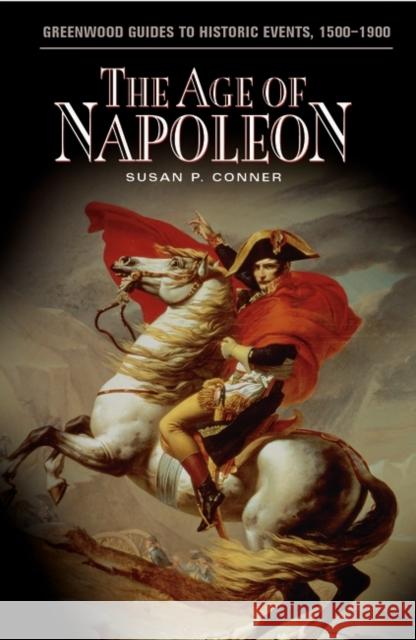
Hegel called him an idea on horseback, a description that suggests Napoleon Bonaparte's complexity, as well as the extent to which he changed France, Europe, and the world. Napoleon has been called a visionary, a pragmatist, a cynical opportunist, an ogre, and a demigod. Here, he is described in his own words and the words of his contemporaries: from his clannishness to his knack for being at the right place at the right time, and from his genius to his obsession with detail.
Napoleon brought order out of the chaos of the French Revolution, pressed for revolutionary equality of...
Hegel called him an idea on horseback, a description that suggests Napoleon Bonaparte's complexity, as well as the extent to which he changed Franc...
Women under the Napoleonic regime have been largely neglected by historians. Through recovered discourses and other primary sources, in Napoleon and the Woman Question June K. Burton uncovers the strategies that Napoleonic women employed to control their lives. She begins with an analysis of Napoleon s personal attitudes about the nature of women. He did not view them as weak vessels, but rather as industrious and strong, with an important role: as wives and mothers. She discusses France s first national system of midwifery education, women s issues in Napoleonic textbooks, the infanticide...
Women under the Napoleonic regime have been largely neglected by historians. Through recovered discourses and other primary sources, in Napoleon and t...