Lawrence Mott s study of the War of Sicilian Vespers provides an unprecedented view of the internal organization and operations of a medieval fleet. While the conflict of 1282-1302 between France and the crown of Aragon for control of Sicily had broad geopolitical implications, it was also notable for having been fought primarily at sea. Mott draws on previously overlooked archival materials, most notably the battle fleet accounts of Roger of Lauria discovered in the Archives of the Cathedral of Valencia, in order to produce an account of unprecedented detail, full of original insights into...
Lawrence Mott s study of the War of Sicilian Vespers provides an unprecedented view of the internal organization and operations of a medieval fleet. W...
William H. Flayhart James C. Bradford Gene A. Smith
Counterpoint to Trafalgar offers the first detailed account of the important land and sea campaign in the Napoleonic wars: the Anglo-Russian invasion of Naples, which prevented Napoleon from controlling the Mediterranean during the war of the third coalition. Flayhart recounts the exciting story of the chaotic efforts of the joint British and Russian military force during the invasion of southern Italy.In 1805 Napoleonic France and Great Britain were locked in a naval duel for maritime supremacy. A British military expedition was sent to the Mediterranean to preserve the independence...
Counterpoint to Trafalgar offers the first detailed account of the important land and sea campaign in the Napoleonic wars: the Anglo-Russian in...
Lord Keith, a Scottish admiral who rose to prominence serving His Majesty from 1761 to 1815, ended his career by overseeing Napoleon s surrender in 1815. Born George Keith Elphinstone, Keith at one time or another held nearly every important command in the British navy, and his story illustrates the navy s history during the Age of Fighting Sail. McCranie s book is the first modern biography of Keith, who learned the art of commanding single ships and small squadrons during the American Revolution. Keith eventually commanded four major fleets the Eastern Seas, the Mediterranean, the North...
Lord Keith, a Scottish admiral who rose to prominence serving His Majesty from 1761 to 1815, ended his career by overseeing Napoleon s surrender in 18...
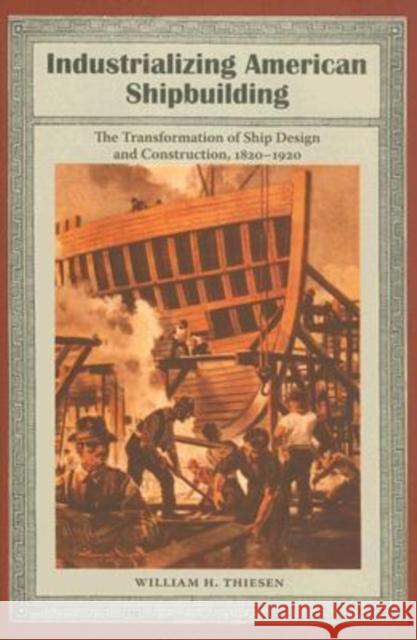
Throughout the 19th century, the shipbuilding industry in America was both art and craft, one based on tradition, instinct, hand tools, and handmade ship models. Even as mechanization was introduced, the trade supported a system of apprenticeship, master builders, and family dynasties, and aesthetics remained the basis for design. Spanning the transition from wood to iron shipbuilding in America, Thiesen s history tells how practical and nontheoretical methods of shipbuilding began to be discarded by the 1880s in favor of technical and scientific methods. Perceiving that British warships were...
Throughout the 19th century, the shipbuilding industry in America was both art and craft, one based on tradition, instinct, hand tools, and handmade s...
Schroeder s interpretive biography restores Rodgers to his rightful place in history as the preeminent and most influential naval officer during America s Age of Sail. Between 1798 and 1815, Rodgers fought with distinction in the Naval War with France, the Barbary War, and the War of 1812. He shaped the postwar development of the navy as president of the Board of Navy Commissioners from 1815 to 1835, and he led a major diplomatic mission to the Mediterranean in the mid 1820s. Drawing on extensive manuscript sources including the voluminous Rodgers family papers and the wealth of articles,...
Schroeder s interpretive biography restores Rodgers to his rightful place in history as the preeminent and most influential naval officer during Am...
This compelling narrative demonstrates the passionate interest the Jeffersonian presidents had in wresting land from less powerful foes and expanding Jefferson's "empire of liberty."
The first two decades of the 19th century found many Americans eager to move away from the crowded eastern seaboard and into new areas where their goals of landownership might be realized. Such movement was encouraged by Presidents Jefferson, Madison, and Monroe- collectively known as the Jeffersonians- who believed that the country's destiny was to have total control...
This compelling narrative demonstrates the passionate interest the Jeffersonian presidents had in wresting land from less powerful foes and<...