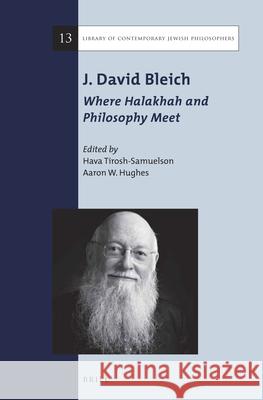
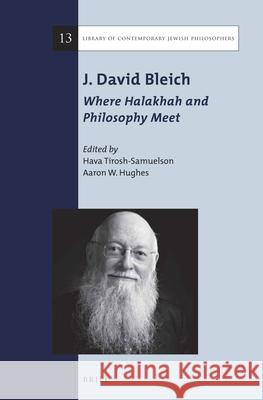
Rabbi J. David Bleich is Professor of Talmud (Rosh Yeshiva) at the Rabbi Isaac Elchanan Theological Seminary, an affiliate of Yeshiva University, as well as the Director of its Postgraduate Institute for the study of Talmudic Jurisprudence and Family Law. In addition, he holds the Herbert and Florence Tenzer Chair of Jewish Law and Ethics at Yeshiva University and is Professor of Law at the Cardozo School of Law. A foremost authority on Jewish law and ethics, he has written extensively on medical ethics, Jewish law and contemporary social issues, and the interface of Jewish law and the...
Rabbi J. David Bleich is Professor of Talmud (Rosh Yeshiva) at the Rabbi Isaac Elchanan Theological Seminary, an affiliate of Yeshiva University, as w...
Rabbi J. David Bleich is Professor of Talmud (Rosh Yeshiva) at the Rabbi Isaac Elchanan Theological Seminary, an affiliate of Yeshiva University, as well as the Director of its Postgraduate Institute for the study of Talmudic Jurisprudence and Family Law. In addition, he holds the Herbert and Florence Tenzer Chair of Jewish Law and Ethics at Yeshiva University and is Professor of Law at the Cardozo School of Law. A foremost authority on Jewish law and ethics, he has written extensively on medical ethics, Jewish law and contemporary social issues, and the interface of Jewish law and the...
Rabbi J. David Bleich is Professor of Talmud (Rosh Yeshiva) at the Rabbi Isaac Elchanan Theological Seminary, an affiliate of Yeshiva University, as w...
Michael A. Fishbane Hava Tirosh-Samuelson Aaron W. Hughes
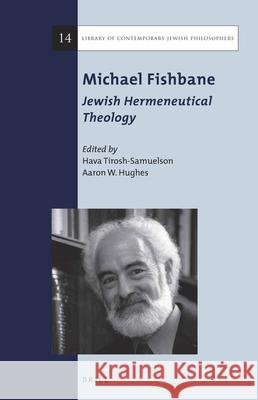
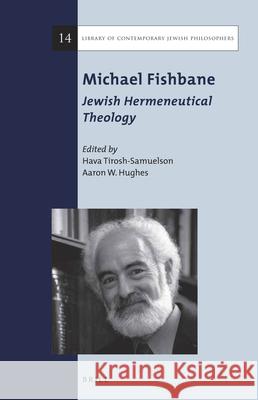
Michael Fishbane is Nathan Cummings Distinguished Service Professor of Jewish Studies at the University of Chicago Divinity School. Trained in biblical studies and the ancient Near East at Brandeis University, he has written on rabbinic interpretation, medieval Jewish philosophy and mysticism, Hasidism, modern Jewish philosophy, and Hebrew poetry. His earlier groundbreaking historical work has provided the foundation for his more recent constructive hermeneutic theology. Among his numerous books are the award-winning Biblical Interpretation in Ancient Israel (1985) and Kiss of...
Michael Fishbane is Nathan Cummings Distinguished Service Professor of Jewish Studies at the University of Chicago Divinity School. Trained in biblica...
Michael A. Fishbane Hava Tirosh-Samuelson Aaron W. Hughes
Michael Fishbane is Nathan Cummings Distinguished Service Professor of Jewish Studies at the University of Chicago Divinity School. Trained in biblical studies and the ancient Near East at Brandeis University, he has written on rabbinic interpretation, medieval Jewish philosophy and mysticism, Hasidism, modern Jewish philosophy, and Hebrew poetry. His earlier groundbreaking historical work has provided the foundation for his more recent constructive hermeneutic theology. Among his numerous books are the award-winning Biblical Interpretation in Ancient Israel (1985) and Kiss of...
Michael Fishbane is Nathan Cummings Distinguished Service Professor of Jewish Studies at the University of Chicago Divinity School. Trained in biblica...
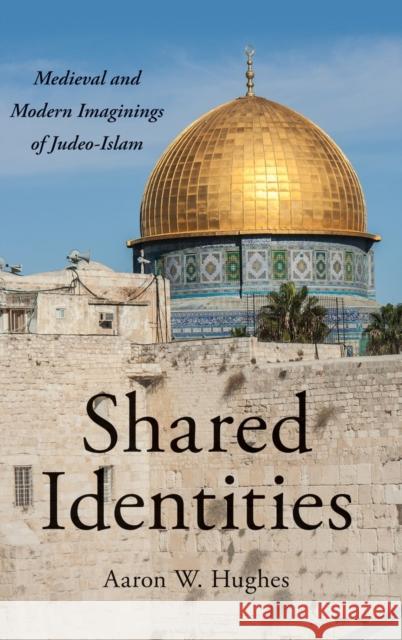
Received opinion imagines Judaism and Islam as two distinct religions interacting in the centuries following the death of Muhammad in the early seventh century. Tradition describes the relations between the two groups using such tropes as "symbiosis." In this revisionist work, Aaron W. Hughes instead argues that various porous and marginal groups-neither fully Muslim nor fully Jewish-exploited a shared terminology to make sense of their social worlds in response to the rapid process of Islamicization. What emerged as normative rabbinic Judaism on the one hand, and Sunni and ShiEven the spread...
Received opinion imagines Judaism and Islam as two distinct religions interacting in the centuries following the death of Muhammad in the early sevent...
Recently, the term "Abrahamic religions" has been used with exceeding frequency in the academy. We now regularly encounter academic books, conferences, and even positions (including endowed chairs) devoted to the so-called "Abrahamic religions." But what exactly are "Abrahamic religions"? Although many perceive him as the common denominator of Judaism, Christianity, and Islam, Abraham remains deceptively out of reach. An ahistorical figure, some contend he holds the seeds for historical reconciliation. Touted as symbol of ecumenicism, Abraham can just as easily function as one of division and...
Recently, the term "Abrahamic religions" has been used with exceeding frequency in the academy. We now regularly encounter academic books, conferences...
Eliezer Schweid Aaron W. Hughes Hava Tirosh-Samuelson
This volume features Eliezer Schweid's philosophy of Judaism for a secular age. The volume brings together four of Schweid's most original and influential philosophical essays and an interview with him that together express his fundamental outlook: the faith of a secular Jew, freely choosing loyalty to his or her national culture and drawing on Jewish heritage to inform how to act responsibly toward one's neighbor, one's people, the world, and God. The themes span the gamut of Schweid's life work: the existential loneliness of the modern Jew; Judaism as a culture; faith in light of the...
This volume features Eliezer Schweid's philosophy of Judaism for a secular age. The volume brings together four of Schweid's most original and influen...
Biography: Neusner is a social commentator, a post-Holocaust theologian, and an outspoken political figure. Jacob Neusner (born 1932) is one of the most important figures in the shaping of modern American Judaism. He was pivotal in transforming the study of Judaism from an insular project only conducted by--and of interest to--religious adherents to one which now flourishes in the secular setting of the university. He is also one of the most colorful, creative, and difficult figures in the American academy. But even those who disagree with Neusner's academic approach to ancient rabbinic texts...
Biography: Neusner is a social commentator, a post-Holocaust theologian, and an outspoken political figure. Jacob Neusner (born 1932) is one of the mo...
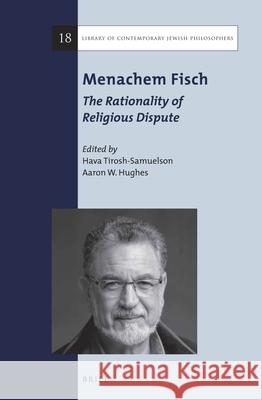
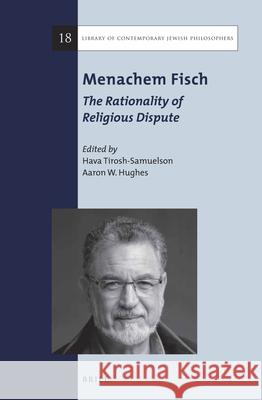
Menachem Fisch is the Joseph and Ceil Mazer Professor of History and Philosophy of Science, Director of the Center for Religious and Interreligious Studies, and former Chair of the Graduate School of Philosophy at Tel Aviv University. He is also the Senior Fellow of the Kogod Center for the Renewal of Jewish Thought at the Shalom Hartman Institute, Jerusalem. Trained in physics, philosophy, and the history and philosophy of science, Fisch has confronted epistemological questions and applied his answers to Jewish philosophy, integrating it into the larger discourse of rationality, normativity,...
Menachem Fisch is the Joseph and Ceil Mazer Professor of History and Philosophy of Science, Director of the Center for Religious and Interreligious St...
Menachem Fisch is the Joseph and Ceil Mazer Professor of History and Philosophy of Science, Director of the Center for Religious and Interreligious Studies, and former Chair of the Graduate School of Philosophy at Tel Aviv University. He is also the Senior Fellow of the Kogod Center for the Renewal of Jewish Thought at the Shalom Hartman Institute, Jerusalem. Trained in physics, philosophy, and the history and philosophy of science, Fisch has confronted epistemological questions and applied his answers to Jewish philosophy, integrating it into the larger discourse of rationality, normativity,...
Menachem Fisch is the Joseph and Ceil Mazer Professor of History and Philosophy of Science, Director of the Center for Religious and Interreligious St...