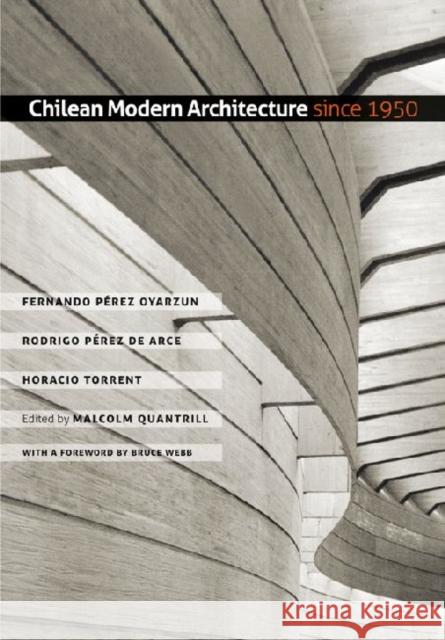
Chilean architecture - along with that of Sao Paolo and Mexico City - sets a benchmark for the intersection of modernism with vernacular influences in Latin America. Culture, landscape, and the geology of this earthquake-prone region have all served as important filters for the practice of post-1950s design in Chile. This volume introduces the modern architecture of Chile to readers in the United States. Looking primarily at domestic architecture as a lens for studying the larger movement, Fernando Perez Oyarzun considers the relationship between theory and practice in Chile. As he shows in...
Chilean architecture - along with that of Sao Paolo and Mexico City - sets a benchmark for the intersection of modernism with vernacular influences in...
Rodrigo Perez de Arce's essay Urban Transformations and Architectural Additions was published during the formative stages of Post Modernism, at the point where theory was becoming seriously established. Jencks' first essays formalising the term Post Modernism in architecture and the revised Learning from Las Vegas were published the previous year. In planning terms, modernism had become associated with comprehensive redevelopment and forms of urban organisation that ignored context, history and any sense of tradition. De Arce considered the essential nature of buildings and the richness of...
Rodrigo Perez de Arce's essay Urban Transformations and Architectural Additions was published during the formative stages of Post Modernism, at the po...