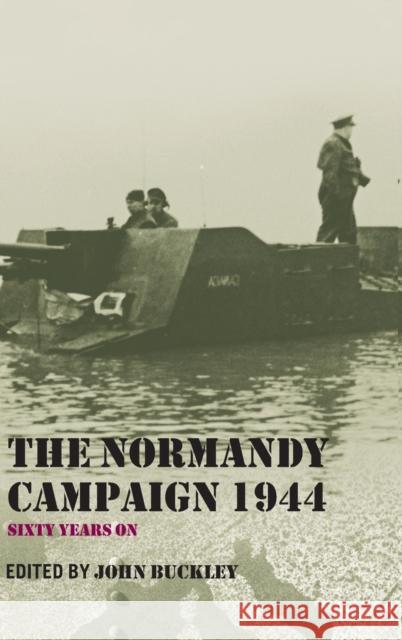
With essays from leading names in military history, this new book re-examines the crucial issues and debates of the D-Day campaign.
It tackles a range of core topics, placing them in their current historiographical context, to present new and sometimes revisionist interpretations of key issues, such as the image of the Allied armies compared with the Germans, the role of air power, and the lessons learned by the military from their operations.
As the Second World War is increasingly becoming a field of revisionism, this book sits squarely within growing debates, shedding new light on...
With essays from leading names in military history, this new book re-examines the crucial issues and debates of the D-Day campaign.
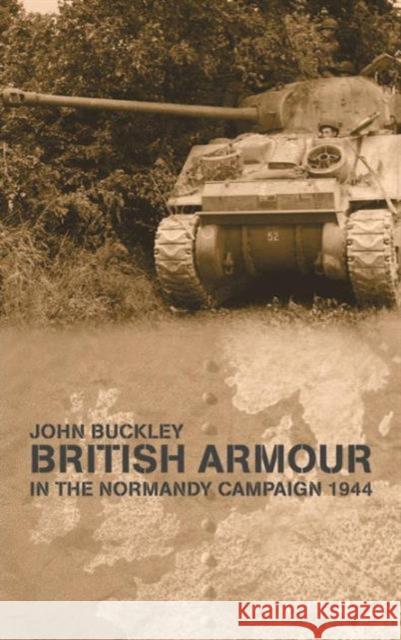
The popular perception of the performance of British armour in the Normandy campaign of 1944 is one of failure and frustration. Despite overwhelming superiority in numbers, Montgomery's repeated efforts to employ his armour in an offensive manner ended in a disappointing stalemate. Explanation of these and other humiliating failures has centred predominantly on the shortcomings of the tanks employed by British formations. This new study by John Buckley challenges the standard view of Normandy as a failure for British armour by analysing the reality and level of the supposed failure and the...
The popular perception of the performance of British armour in the Normandy campaign of 1944 is one of failure and frustration. Despite overwhelming s...
The popular perception of the performance of British armour in the Normandy campaign of 1944 is one of failure and frustration. Despite overwhelming superiority in numbers, Montgomery's repeated efforts to employ his armour in an offensive manner ended in a disappointing stalemate. Explanation of these and other humiliating failures has centred predominantly on the shortcomings of the tanks employed by British formations. This new study by John Buckley challenges the standard view of Normandy as a failure for British armour by analysing the reality and level of the supposed failure and the...
The popular perception of the performance of British armour in the Normandy campaign of 1944 is one of failure and frustration. Despite overwhelming s...
Intelligence is used daily by law enforcement personnel across the world in operations to combat terrorism and drugs and to assist in investigating serious and organized crime. Managing Intelligence: A Guide for Law Enforcement Professionals is designed to assist practitioners and agencies build an efficient system to gather and manage intelligence effectively and lawfully in line with the principles of intelligence-led policing.
Research for this book draws from discussions with hundreds of officers in different agencies, roles, and ranks from the UK, United States,...
Intelligence is used daily by law enforcement personnel across the world in operations to combat terrorism and drugs and to assist in investigating...
Over the past seventy years, the Allied invasion of Northwestern France in June 1944 has come to stand as something more than a major battle in an increasingly distant war. The assault itself formed a vital component of Allied victory in the Second World War. D-Day, as the initial landing is traditionally termed, has developed into a sign and symbol; as a word it carries with it a series of ideas and associations that have come to symbolize different things to different people and nations. As such, the commemorative activities linked to the battle offer a window for viewing the various...
Over the past seventy years, the Allied invasion of Northwestern France in June 1944 has come to stand as something more than a major battle in an inc...
The story of the Royal Air Force, from its creation as the first major independent air force in the world in 1918, through World War and Cold War, to the struggle against jihadi terrorism in the 21st century.
The story of the Royal Air Force, from its creation as the first major independent air force in the world in 1918, through World War and Cold War, to ...