I enjoyed and was challenged by reading this book, and learned from, and with, it. It is useful for browsing and for a deeper exploration of chosen topics. It offers a healthy enrichment for all who have a dynamic interest in the external and internal supervisory relationship. I warmly recommend it' - British Journal of Psychotherapy
This book is thoughtful, scholarly and very well written. The content is well set out in separate sections making it eminently readable. It is solidly based on psychoanalytic theory highlighting the transformational impact of a...
I enjoyed and was challenged by reading this book, and learned from, and with, it. It is useful for browsing and for a deeper exploration of chosen to...
I enjoyed and was challenged by reading this book, and learned from, and with, it. It is useful for browsing and for a deeper exploration of chosen topics. It offers a healthy enrichment for all who have a dynamic interest in the external and internal supervisory relationship. I warmly recommend it' - British Journal of Psychotherapy
This book is thoughtful, scholarly and very well written. The content is well set out in separate sections making it eminently readable. It is solidly based on psychoanalytic theory highlighting the transformational impact of a...
I enjoyed and was challenged by reading this book, and learned from, and with, it. It is useful for browsing and for a deeper exploration of chosen to...
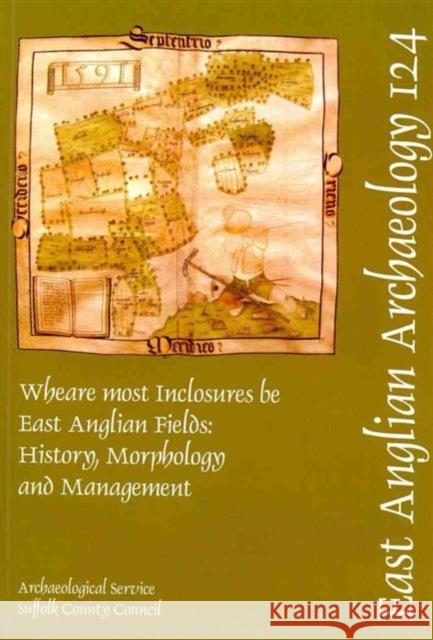
The results of a project carried out from 2000-05 to traces the historical development of field systems in East Anglia. The authors identified 8 land types (with 18 sub-types) and used these to analyse twelve areas in detail, particularly distinguishing between common fields and block holdings. Among their conclusions are that the co-axial fields identified are probably not as old as has sometimes been claimed (i.e. not pre-Roman), that East Anglia can be conveniently divided into two broad zones (with the river Gipping providing the boundary), and that the late Anglo-Saxon period proved to...
The results of a project carried out from 2000-05 to traces the historical development of field systems in East Anglia. The authors identified 8 land ...
Aby Edward Martin Report on excavations and discussion of artefacts and zoological evidence from seven prehistoric sites in Suffolk: an Iron Age enclosure at Barnham; two first millennium BC settlements at Barnham; three prehistoric hill-top settlements in south-east Suffolk; an Early Iron Age hill-top site at Framlingham.
Aby Edward Martin Report on excavations and discussion of artefacts and zoological evidence from seven prehistoric sites in Suffolk: an Iron Age enclo...