How are our memories, our narratives, and our intelligence interrelated? What can artificial intelligence and narratology say to each other? In this pathbreaking study by an expert on learning and computers, Roger C. Schank argues that artificial intelligence must be based on real human intelligence, which consists largely of applying old situations, and our narratives of them, to new situations in less than obvious ways.
How are our memories, our narratives, and our intelligence interrelated? What can artificial intelligence and narratology say to each other? In this p...
A fascinating collection of essays about Bakhtin that incorporate a variety of disciplinary backgrounds, including theater arts, philosophy, history, women's studies, Latin American literature, and Russian literature. The authors take Bakhtin's ethics, as articulated in his writings of 1919-1929, and extend them into areas of thought that themselves enter into fruitful dialogue with his theoretical positions, endeavoring at all times to remain cognizant of both Russian and Western views of Bakhtin. The essayists' interactions attest to the productivity of any thoughtful encounter with...
A fascinating collection of essays about Bakhtin that incorporate a variety of disciplinary backgrounds, including theater arts, philosophy, history, ...
A fascinating collection of essays about Bakhtin that incorporate a variety of disciplinary backgrounds, including theater arts, philosophy, history, women's studies, Latin American literature, and Russian literature. The authors take Bakhtin's ethics, as articulated in his writings of 1919-1929, and extend them into areas of thought that themselves enter into fruitful dialogue with his theoretical positions, endeavoring at all times to remain cognizant of both Russian and Western views of Bakhtin. The essayists' interactions attest to the productivity of any thoughtful encounter with...
A fascinating collection of essays about Bakhtin that incorporate a variety of disciplinary backgrounds, including theater arts, philosophy, history, ...
In Writing a Usable Past, Brintlinger considers the interactions of post-Revolutionary Russian and emigre culture with the genre of biography in its various permutations, arguing that in the years after the Revolution, Russian writers looked to the great literary figures of the past to help them construct a post-Revolutionary present. In detailed looks at the biographical writing of Yuri Tynianov, Vladislav Khodasevich, and Mikhail Bulgakov, Brintlinger follows each author's successful biography/ies and their failed attempts at biographies of Alexander Pushkin on the centennial...
In Writing a Usable Past, Brintlinger considers the interactions of post-Revolutionary Russian and emigre culture with the genre of biograp...
Fyodor M. Dostoevsky Gary Saul Morson Kenneth Lantz
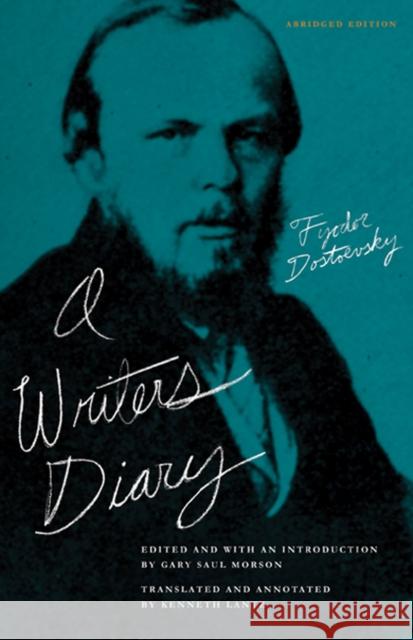
The essential entries from Dostoevsky's complete "Diary," called his boldest experiment in literary form, are now available in this abridged edition; it is a uniquely encyclopedic forum of fictional and nonfictional genres. "A Writer's Diary" began as a column in a literary journal, but by 1876 Dostoevsky was able to bring it out as a complete monthly publication with himself as an editor, publisher, and sole contributor, suspending work on "The Brothers Karamazov" to do so.The "Diary"'s radical format was matched by the extreme range of its contents. In a single frame it incorporated an...
The essential entries from Dostoevsky's complete "Diary," called his boldest experiment in literary form, are now available in this abridged edition; ...
The Russian formalists emerged from the Russian Revolution with ideas about the independence of literature. They enjoyed that independence until Stalin shut them down. By then, however, they had produced essays that remain among the best defenses ever written for both literature and its theory. Included here are four essays representing key points in the formalists short history. Victor Shklovsky s pioneering Art as Technique (1917) defines the literary as a way to make us see familiar things as if for the first time. His 1921 essay on Tristram Shandy makes that eccentric novel the...
The Russian formalists emerged from the Russian Revolution with ideas about the independence of literature. They enjoyed that independence until Stali...
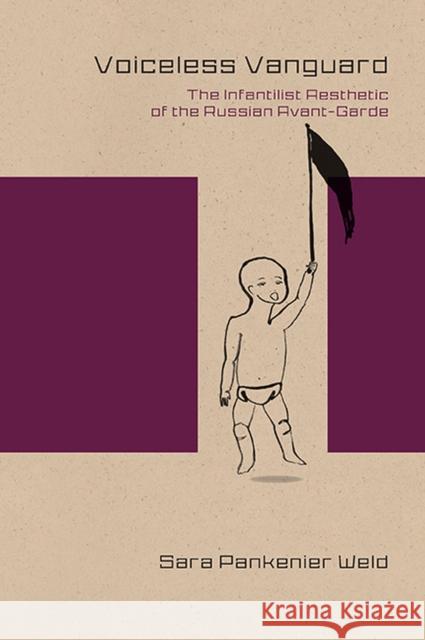
Winner, 2015 International Research Society in Children's Literature (IRSCL) Book Award Voiceless Vanguard: The Infantilist Aesthetic of the Russian Avant-Garde offers a new approach to the Russian avant-garde. It argues that central writers, artists, and theorists of the avant-garde self-consciously used an infantile aesthetic, as inspired by children's art, language, perspective, and logic, to accomplish the artistic renewal they were seeking in literature, theory, and art. It treats the influence of children's drawings on the Neo-Primitivist art of Mikhail Larionov, the role of...
Winner, 2015 International Research Society in Children's Literature (IRSCL) Book Award Voiceless Vanguard: The Infantilist Aesthetic of the Ru...