In the early thirteenth century, the diocese of Liege witnessed an extraordinary religious revival, known to us largely through the abundant corpus of saints' lives from that region. Cistercian monks and nuns, along with beguines and recluses, formed close-knit networks of spiritual friendship that easily crossed the boundaries of gender, religious status, and even language. Holy women such as Mary of Oignies and Christina the Astonishing were held up by their biographers as models of orthodoxy and miraculous powers. Less familiar but no less fascinating are the male saints of the region....
In the early thirteenth century, the diocese of Liege witnessed an extraordinary religious revival, known to us largely through the abundant corpus...
"Frauenlob" was the stage name of Heinrich von Meissen (c. 1260-1318), a medieval German poet-minstrel. A famous and controversial figure in his day, Frauenlob (meaning "praise of ladies") exercised a strong influence on German literature into the eighteenth century. This book introduces the poet to English-speaking readers with a fresh poetic translation of his masterpiece, the Marienleich--a virtuosic poem of more than 500 lines in praise of the Virgin Mary.
Barbara Newman, known for her pathbreaking translation of Hildegard of Bingen's Symphonia, brilliantly...
"Frauenlob" was the stage name of Heinrich von Meissen (c. 1260-1318), a medieval German poet-minstrel. A famous and controversial figure in his da...
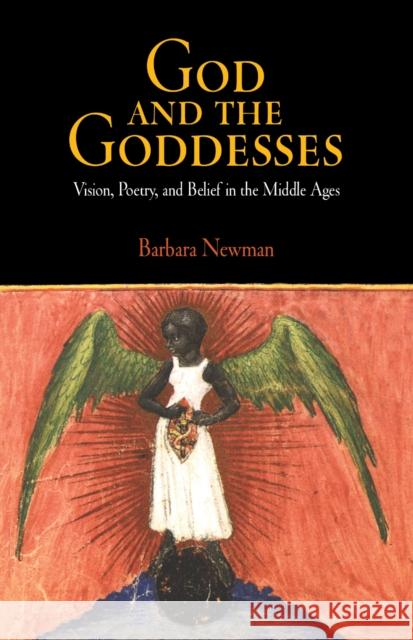
Contrary to popular belief, the medieval religious imagination did not restrict itself to masculine images of God but envisaged the divine in multiple forms. In fact, the God of medieval Christendom was the Father of only one Son but many daughters--including Lady Philosophy, Lady Love, Dame Nature, and Eternal Wisdom. God and the Goddesses is a study in medieval imaginative theology, examining the numerous daughters of God who appear in allegorical poems, theological fictions, and the visions of holy women. We have tended to understand these deities as mere personifications and poetic...
Contrary to popular belief, the medieval religious imagination did not restrict itself to masculine images of God but envisaged the divine in multiple...
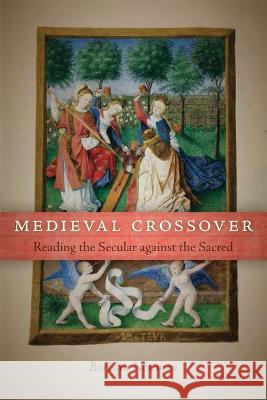
The sacred and the secular in medieval literature have too often been perceived as opposites, or else relegated to separate but unequal spheres. In Medieval Crossover: Reading the Secular against the Sacred, Barbara Newman offers a new approach to the many ways that sacred and secular interact in medieval literature, arguing that (in contrast to our own cultural situation) the sacred was the normative, unmarked default category against which the secular always had to define itself and establish its niche. Newman refers to this dialectical relationship as "crossover"—which is not a genre in...
The sacred and the secular in medieval literature have too often been perceived as opposites, or else relegated to separate but unequal spheres. In Me...






![Frauenlob's Song of Songs: A Medieval German Poet and His Materpiece [With CD] Newman, Barbara 9780271029252 Pennsylvania State University Press](/9780271029252_frauenlobs_song_of_songs_a_medieval_german_poet_and_his_materpiece_with_cd.jpg "Frauenlob's Song of Songs: A Medieval German Poet and His Materpiece [With CD]")