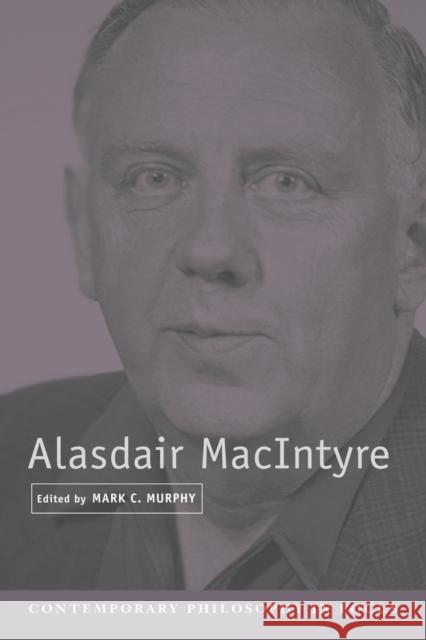
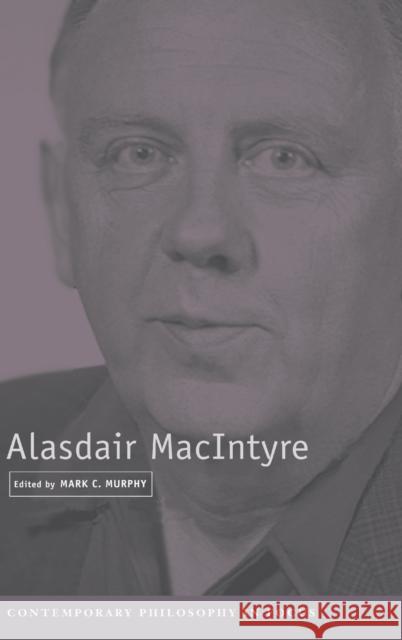
Alasdair MacIntyre's writings on ethics, political philosophy, philosophy of religion, philosophy of the social sciences and the history of philosophy have established him as one of the philosophical giants of the last fifty years. His best-known book, After Virtue (1981), spurred the profound revival of virtue ethics. Moreover, MacIntyre, unlike so many of his contemporaries, has exerted a deep influence beyond the bounds of academic philosophy. This volume focuses on the major themes of MacIntyre's work with critical expositions of MacIntyre's views on the history of philosophy, the role of...
Alasdair MacIntyre's writings on ethics, political philosophy, philosophy of religion, philosophy of the social sciences and the history of philosophy...
The Philosophy of Law is a broad-reaching text that guides readers through the basic analytical and normative issues in the field, highlighting key historical and contemporary thinkers and offering a unified treatment of the various issues in the philosophy of law.
Enlivened with numerous, everyday examples to illustrate various concepts of law.
Employs the idea of three central commonplaces about law - that law is a social matter, that law is authoritative, and that law is for the common good - to organize seemingly disparate topics and to...
The Philosophy of Law is a broad-reaching text that guides readers through the basic analytical and normative issues in the field, highlighting...
Natural law is a perennial though poorly represented and understood issue in political philosophy and the philosophy of law. Mark C. Murphy argues that the central thesis of natural law jurisprudence--that law is backed by decisive reasons for compliance--sets the agenda for natural law political philosophy, which demonstrates how law gains its binding force by way of the common good of the political community. Murphy's work ranges over the central questions of natural law jurisprudence and political philosophy, including the formulation and defense of the natural law jurisprudential thesis,...
Natural law is a perennial though poorly represented and understood issue in political philosophy and the philosophy of law. Mark C. Murphy argues tha...
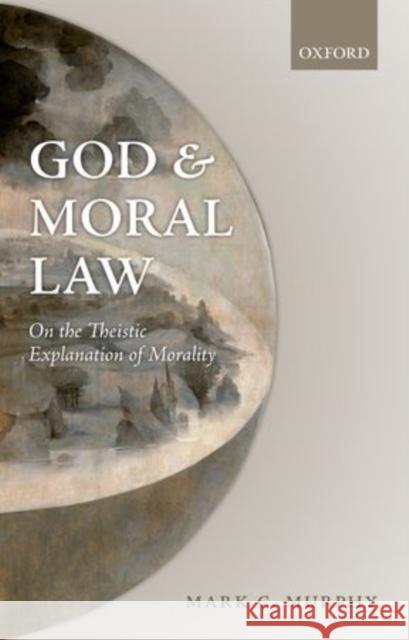
Does God's existence make a difference to how we explain morality? Mark C. Murphy critiques the two dominant theistic accounts of morality--natural law theory and divine command theory--and presents a novel third view. He argues that we can value natural facts about humans and their good, while keeping God at the centre of our moral explanations. The characteristic methodology of theistic ethics is to proceed by asking whether there are features of moral norms that can be adequately explained only if we hold that such norms have some sort of theistic foundation. But this methodology,...
Does God's existence make a difference to how we explain morality? Mark C. Murphy critiques the two dominant theistic accounts of morality--natural la...
Alasdair MacIntyre's writings on ethics, political philosophy, philosophy of religion, philosophy of the social sciences and the history of philosophy have established him as one of the philosophical giants of the last fifty years. His best-known book, After Virtue (1981), spurred the profound revival of virtue ethics. Moreover, MacIntyre, unlike so many of his contemporaries, has exerted a deep influence beyond the bounds of academic philosophy. This volume focuses on the major themes of MacIntyre's work with critical expositions of MacIntyre's views on the history of philosophy, the role of...
Alasdair MacIntyre's writings on ethics, political philosophy, philosophy of religion, philosophy of the social sciences and the history of philosophy...
In the first book wholly concerned with divine authority, Mark C. Murphy explores the extent of God's rule over created rational beings. The author challenges the view widely supported by theists and nontheists alike that if God exists, then humans must be bound by an obligation of obedience to this being. He demonstrates that this view, the "authority thesis," cannot be sustained by any of the arguments routinely advanced on its behalf, including those drawn from perfect being theology, metaethical theory, normative principles, and even Scripture and tradition. After exposing the...
In the first book wholly concerned with divine authority, Mark C. Murphy explores the extent of God's rule over created rational beings. The author ch...
According to the natural law account of practical rationality, the basic reasons for actions are basic goods that are grounded in the nature of human beings. Practical rationality aims to identify and characterize reasons for action and to explain how choice between actions worth performing can be appropriately governed by rational standards. Natural Law and Practical Rationality is a defense of a contemporary natural law theory of practical rationality, demonstrating its inherent plausibility and engaging systematically with rival egoist, consequentialist, Kantian and virtue accounts.
According to the natural law account of practical rationality, the basic reasons for actions are basic goods that are grounded in the nature of human ...
Every version of the argument from evil requires a premise concerning God's motivation - about the actions that God is motivated to perform or the states of affairs that God is motivated to bring about. The typical source of this premise is a conviction that God is, obviously, morally perfect, where God's moral perfection consists in God's being motivated to act in accordance with the norms of morality by which both we and God are governed. The aim of God's Own Ethics is to challenge this understanding by giving arguments against this view of God as morally perfect and by...
Every version of the argument from evil requires a premise concerning God's motivation - about the actions that God is motivated to perform or the sta...
Does God's existence make a difference to how we explain morality? Mark C. Murphy critiques the two dominant theistic accounts of morality--natural law theory and divine command theory--and presents a novel third view. He argues that we can value natural facts about humans and their good, while keeping God at the centre of our moral explanations. The characteristic methodology of theistic ethics is to proceed by asking whether there are features of moral norms that can be adequately explained only if we hold that such norms have some sort of theistic foundation. But this methodology,...
Does God's existence make a difference to how we explain morality? Mark C. Murphy critiques the two dominant theistic accounts of morality--natural la...
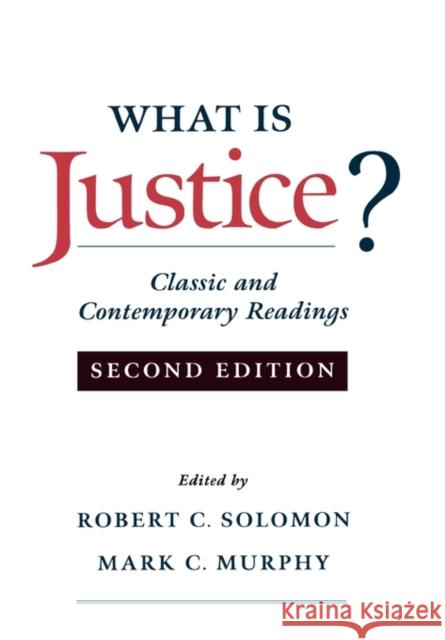
What is Justice? Classic and Contemporary Readings, 2/e, brings together many of the most prominent and influential writings on the topic of justice, providing an exceptionally comprehensive introduction to the subject. It places special emphasis on "social contract" theories of justice, both ancient and modern, culminating in the monumental work of John Rawls and various responses to his work. It also deals with questions of retributive justice and punishment, topics that are often excluded from other volumes on justice. This new edition features expanded and updated readings on...
What is Justice? Classic and Contemporary Readings, 2/e, brings together many of the most prominent and influential writings on the topic of...