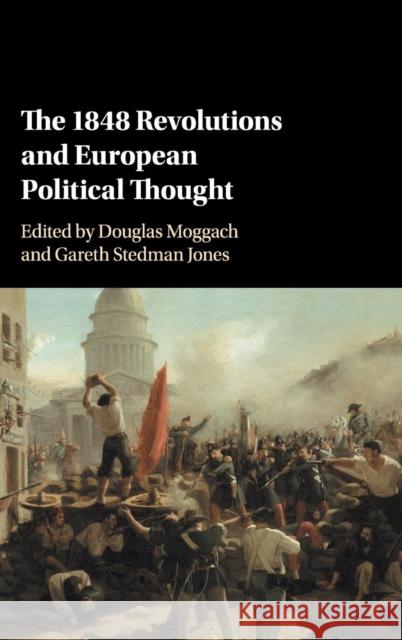
The period leading up to the Revolutions of 1848 is a seminal moment in the history of political thought, demarcating the ideological currents and defining the problems of freedom and social cohesion, which are among the key issues of modern politics. This anthology offers new research on Hegel's followers in the 1830s and 1840s. Including essays by well-known philosophers, political scientists, and historians from Europe and North America, it pays special attention to questions of state power, the economy, poverty, and labor, as well as to a range of ideas about freedom. The book examines...
The period leading up to the Revolutions of 1848 is a seminal moment in the history of political thought, demarcating the ideological currents and def...
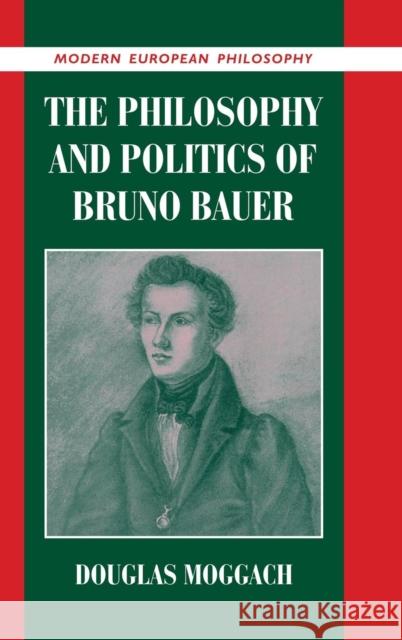
This is the first comprehensive study in English of Bruno Bauer, a leading philosopher of the 1840s. Inspired by the philosophy of Hegel, Bauer led an intellectual revolution that influenced Marx and shaped modern secular humanism. In the process he offered a republican alternative to liberalism and socialism, criticized religious and political conservatism and set out the terms for the development of modern mass and industrial society.
This is the first comprehensive study in English of Bruno Bauer, a leading philosopher of the 1840s. Inspired by the philosophy of Hegel, Bauer led an...
The period from 1780 to 1850 witnessed an unprecedented explosion of philosophical creativity in the German territories. In the thinking of Kant, Schiller, Fichte, Hegel, and the Hegelian school, new theories of freedom and emancipation, new conceptions of culture, society, and politics, arose in rapid succession. The members of the Hegelian school, forming around Hegel in Berlin and most active in the 1830 s and 1840 s, are often depicted as mere epigones, whose writings are at best of historical interest. In "Politics, Religion, and Art: Hegelian Debates, "Douglas Moggach moves the...
The period from 1780 to 1850 witnessed an unprecedented explosion of philosophical creativity in the German territories. In the thinking of Kant, Schi...
The period from 1780 to 1850 witnessed an unprecedented explosion of philosophical creativity in the German territories. In the thinking of Kant, Schiller, Fichte, Hegel, and the Hegelian school, new theories of freedom and emancipation, new conceptions of culture, society, and politics, arose in rapid succession. The members of the Hegelian school, forming around Hegel in Berlin and most active in the 1830 s and 1840 s, are often depicted as mere epigones, whose writings are at best of historical interest. In "Politics, Religion, and Art: Hegelian Debates, "Douglas Moggach moves the...
The period from 1780 to 1850 witnessed an unprecedented explosion of philosophical creativity in the German territories. In the thinking of Kant, Schi...
The period leading up to the Revolutions of 1848 is a seminal moment in the history of political thought, demarcating the ideological currents and defining the problems of freedom and social cohesion, which are among the key issues of modern politics. This anthology offers new research on Hegel's followers in the 1830s and 1840s. Including essays by well-known philosophers, political scientists, and historians from Europe and North America, it pays special attention to questions of state power, the economy, poverty, and labor, as well as to a range of ideas about freedom. The book examines...
The period leading up to the Revolutions of 1848 is a seminal moment in the history of political thought, demarcating the ideological currents and def...