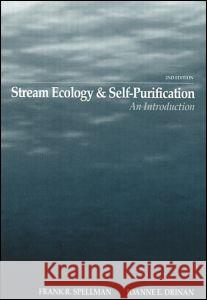
This new edition of a very successful standard reference is expanded and fully reworked. The book explains and quantifies the processes whereby streams cleanse themselves, reducing their pollutant load as a natural process. Mechanisms of purification in running waters have always been critical with regard to clearly identified pollution sources. This new edition explains the self-purifying function of streams and rivers in light of recent EPA rules on nonpoint pollutants and total maximum daily loads (TMDLs). It also covers basic concepts such as biological oxygen demand (BOD). Also new in...
This new edition of a very successful standard reference is expanded and fully reworked. The book explains and quantifies the processes whereby stream...
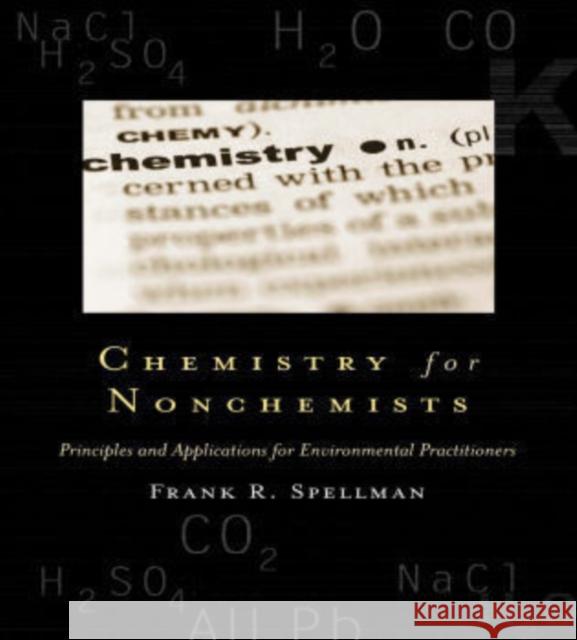
Chemistry for Nonchemists provides environmental, health and safety professionals with an introductory reference book that will help them to understand the fundamental principles of chemistry and to understand those principles as they apply to the environmental compliance programs that regulate workplace activity. The book uses easy-to-understand language, keeps the science and mathematical language to a minimum, and provides numerous resources for enhancing the learning process.
Chemistry for Nonchemists provides environmental, health and safety professionals with an introductory reference book that will help them to understan...
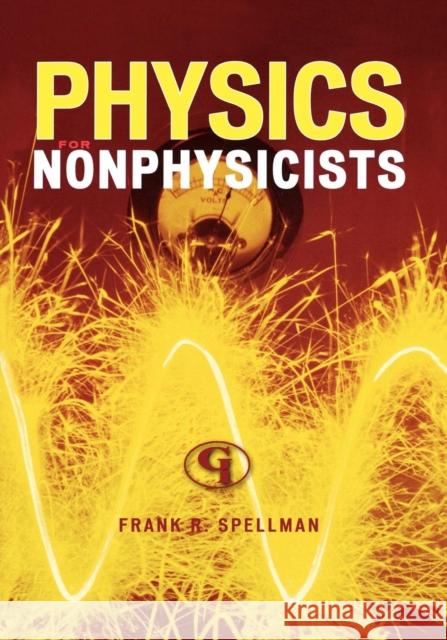
Environmental professionals who look beyond their specialties and acquire knowledge in a variety of sciences not only make solving on-the-job problems easier for themselves, but they also increase their employment opportunities. This fifth book in the 'non-specialist' series provides both professionals and students with a clear, concise overview of the most important aspects of physics in a way that anyone, even those who have never taken a formal physics course, can relate to.
Environmental professionals who look beyond their specialties and acquire knowledge in a variety of sciences not only make solving on-the-job problems...
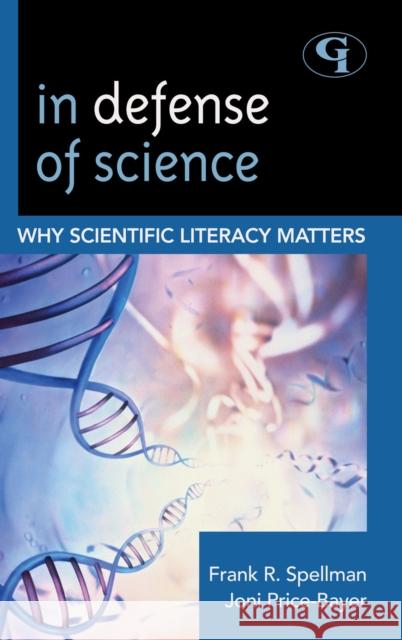
Today, only a few people outside of the scientific community are conversant with the tradition of science and its many breakthroughs. The rest are scientifically illiterate. So say Frank R. Spellman and Joni Price-Bayer, authors of In Defense of Science: Why Scientific Literacy Matters. This book explains why ordinary citizens need to have an understanding of science, its methods, and its groundbreaking discoveries. The authors introduce the most basic scientific concepts in accessible and straightforward language. Along the way they debunk several misconceptions of science and scientists,...
Today, only a few people outside of the scientific community are conversant with the tradition of science and its many breakthroughs. The rest are sci...
The list keeps growing The latest in Government Institutes' "non-specialist" series, Biology for Nonbiologists continues the tradition established by Toxicology for Non-Toxicologists and Chemistry for Nonchemists, by providing environmental and occupational-safety-and-health practitioners and students with a comprehensive overview of the principles and concepts of modern biology. Covering everything from basic chemistry principles and the consequences of biology's interaction with the environment to basic biological principles and applications, this convenient handbook provides a quick...
The list keeps growing The latest in Government Institutes' "non-specialist" series, Biology for Nonbiologists continues the tradition established by...
Geology for Nongeologists introduces basic concepts in geology: how rocks, minerals, and fossils are classified, how wind, ice, and water have shaped the earth, how mountains are formed, and how volcanoes, geysers, earthquakes, glaciers, and groundwater work to modify the physical structure of Earth. Written for both the technical practitioner in the field and the student in the classroom, this book is accessible for a range of readers, including those who have no experience with geology or other sciences.
Geology for Nongeologists introduces basic concepts in geology: how rocks, minerals, and fossils are classified, how wind, ice, and water have shaped ...
In an era when many in the science community feel that science is under attack, In Defense of Science explains why ordinary citizens need to have an understanding of science, its methods, and its groundbreaking discoveries. The authors debunk several misconceptions of science and scientists, and advocate that science is an integral part of society and everyday life.
In an era when many in the science community feel that science is under attack, In Defense of Science explains why ordinary citizens need to have an u...
Today, only a few people outside of the scientific community are conversant with the tradition of science and its many breakthroughs. The rest are scientifically illiterate. So say Frank R. Spellman and Joni Price-Bayer, authors of In Defense of Science: Why Scientific Literacy Matters. This book explains why ordinary citizens need to have an understanding of science, its methods, and its groundbreaking discoveries. The authors introduce the most basic scientific concepts in accessible and straightforward language. Along the way they debunk several misconceptions of science and scientists,...
Today, only a few people outside of the scientific community are conversant with the tradition of science and its many breakthroughs. The rest are sci...