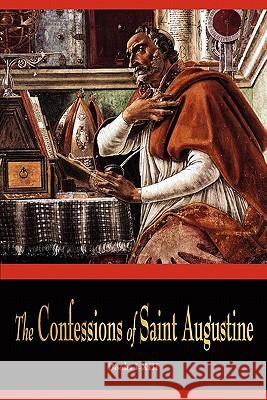
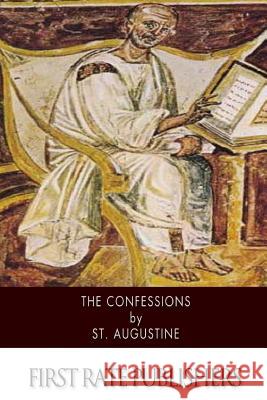
More than an autobiography, The Confessions of St. Augustine is one of the most influential religious books in the Christian tradition. A great work of Western literature, it recalls crucial events and episodes in the author's life, in particular, life with his devoutly Christian mother and his origins in rural Algeria in the mid-fourth century A.D.; the rise to a lavish life at the imperial court in Milan; his struggle with sexual desires; eventual renunciation of secular ambitions and marriage; and recovery of his Catholic faith. This intensely personal narrative -- among the...
More than an autobiography, The Confessions of St. Augustine is one of the most influential religious books in the Christian tradition. A gr...
Spirituality involves taking our personal experience seriously as raw material for redemption and holiness, examining the material of our daily lives with as much rigor as we do Scripture and doctrine. The Confessions is the landmark work in this exercise. Eugene Peterson, from his book "Take and Read"
Written in the waning days of the Roman era, Augustine s "Confessions" are the moving diary of a soul s journey. From his earliest memories of childhood, through his turbulent and licentious youth, to his resolute conversion at the age of 32, Augustine traces a pilgrimage of...
Spirituality involves taking our personal experience seriously as raw material for redemption and holiness, examining the material of our daily li...
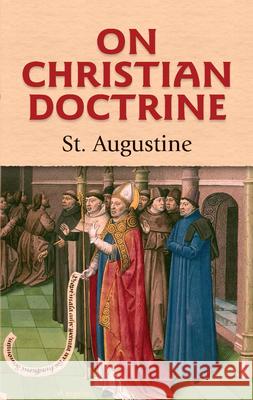
Since the dawn of the fifth century, theology students, religious scholars, and Christian readers have turned to this volume for instruction. Written by one of the foremost leaders in the development of Christian thought, it offers practical as well as theoretical guidance on how to read the Bible and explain the meaning of scripture. Augustine intended his treatise for the priests in his North African diocese of Hippo, but ultimately, the saint's counsel laid the groundwork for modern hermeneutics and semiotics. The first of On Christian Doctrine's four parts begins with an...
Since the dawn of the fifth century, theology students, religious scholars, and Christian readers have turned to this volume for instruction. Written ...
Augustine of Hippo (November 13, 354 - August 28, 430), also known as St. Augustine, was Bishop of Hippo Regius. He was a Latin-speaking philosopher and theologian who lived in the Roman Africa Province. His writings were very influential in the development of Western Christianity. According to his contemporary, Jerome, Augustine "established anew the ancient Faith" In his early years he was heavily influenced by Manichaeism and afterward by the Neo-Platonism of Plotinus. After his conversion to Christianity and baptism (AD 387), Augustine developed his own approach to philosophy and...
Augustine of Hippo (November 13, 354 - August 28, 430), also known as St. Augustine, was Bishop of Hippo Regius. He was a Latin-speaking philosopher a...
Augustine of Hippo (November 13, 354 - August 28, 430), also known as St. Augustine, was Bishop of Hippo Regius. He was a Latin-speaking philosopher and theologian who lived in the Roman Africa Province. His writings were very influential in the development of Western Christianity. According to his contemporary, Jerome, Augustine "established anew the ancient Faith" In his early years he was heavily influenced by Manichaeism and afterward by the Neo-Platonism of Plotinus. After his conversion to Christianity and baptism (AD 387), Augustine developed his own approach to philosophy and...
Augustine of Hippo (November 13, 354 - August 28, 430), also known as St. Augustine, was Bishop of Hippo Regius. He was a Latin-speaking philosopher a...
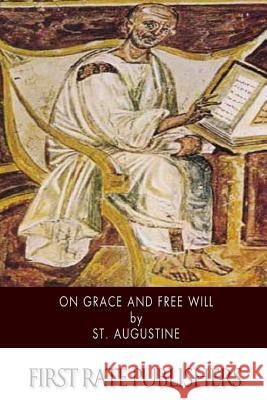
This volume contains translations of four of Augustine's earliest works: De beata vita, Contra Academicos, De ordine, and Soliloquia. His embrace of Platonic certitude regarding the primacy of the unseen world of perfection and eternal truth is at the forefront of these philosophical works, which were composed in the genre of the dialogue. Writing at Cassiciacum in the year 386, the young Augustine grapples with questions of epistemology, theodicy, morality, and the soul's quest for God.
This volume contains translations of four of Augustine's earliest works: De beata vita, Contra Academicos, De ordine, and Soliloquia. His embrace of P...
During the brief period between 412 and 414, Augustine's many theological and pastoral concerns produced an abundant correspondence (Letters 131-164) on issues ranging from the Pelagian views of grace and the soul's origin to the need for assimilating former Donatists into Catholic society with compassion and a conciliatory spirit, as well as questions of theology, social mores, and physical versus spiritual knowledge.
During the brief period between 412 and 414, Augustine's many theological and pastoral concerns produced an abundant correspondence (Letters 131-164) ...