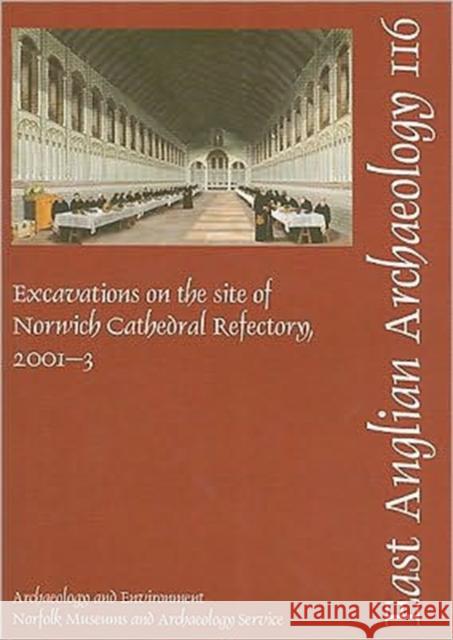
A campaign to improve visitor and education facilities at Norwh cathedral involved the construction of new buildings within the west and south ranges of the cloister, and led to excavation of the area where the medieval refectory once stood. This revealed archaeological evidence of the Late Saxon, medieval and post-medieval periods and forms the subject of this report. Excavation has confirmed the long-held supposition that this area of Norwich was populated during the Late Saxon period. Timber buildings of both post-hole and beam slot construction were present, along with rubbish pits, many...
A campaign to improve visitor and education facilities at Norwh cathedral involved the construction of new buildings within the west and south ranges ...
Heather Wallis Norfolk Museums and Archaeology Service
In 1995 a large-scale excavation was undertaken to the south of the Little Ouse in Thetford, in an area which had once been part of the Late Saxon settlement. Analysis of deposits from the river valley has given important new insights into local environmental conditions from the Bronze Age through to the Late Saxon period. The excavation results have added significantly to our understanding of Late Saxon Thetford, and confirmed that there was no earlier settlement in this part of the town. That the success of Thetford as a large and influential town was fairly short-lived was reflected in the...
In 1995 a large-scale excavation was undertaken to the south of the Little Ouse in Thetford, in an area which had once been part of the Late Saxon set...