The former general in chief of the Union armies during the Civil War . . . the two-term president of the United States . . . the beloved ambassador of American goodwill around the globe . . . the respected New York financier Ulysses S. Grant was dying. The hardscrabble man who regularly smoked 20 cigars a day had developed terminal throat cancer. Thus began Grant s final battle a race against his own failing health to complete his Personal Memoirs in an attempt to secure his family s financial future. But the project evolved into something far more: an effort to secure the very meaning of the...
The former general in chief of the Union armies during the Civil War . . . the two-term president of the United States . . . the beloved ambassador of...
George Gordon Meade could hardly believe it: only three days earlier, he had been thrust unexpectedly into command of the Army of the Potomac, which was cautiously stalking its long-time foe, the Army of Northern Virginia, as it launched a bold invasion northward. Meade had hardly wrapped his head around the situation before everything exploded.
Outside the small college town of Gettysburg, Confederates had inexplicably turned on the lead elements of Meade s army and attacked. The first day of battle had ended poorly for Federals, but by nightfall, they had found a lodgment on high...
George Gordon Meade could hardly believe it: only three days earlier, he had been thrust unexpectedly into command of the Army of the Potomac, which w...
July 1, 1863, had gone poorly for the Union army's XI Corps. Shattered in battle north of the Pennsylvania town of Gettysburg, the battered and embarrassed unit ended the day hunkered at the crest of a cemetery-topped hill south of the village. Reinforcements fortified the position, which extended eastward to include another key piece of high ground, Culp's Hill. The Federal line also extended southward down Cemetery Ridge, forming what eventually became a long fishhook. July 2 saw a massive Confederate attack against the southernmost part of the line. As the Southern juggernaut rolled...
July 1, 1863, had gone poorly for the Union army's XI Corps. Shattered in battle north of the Pennsylvania town of Gettysburg, the battered and embarr...
Chris Mackowski Kristopher D. White Thomas a. Desjardin
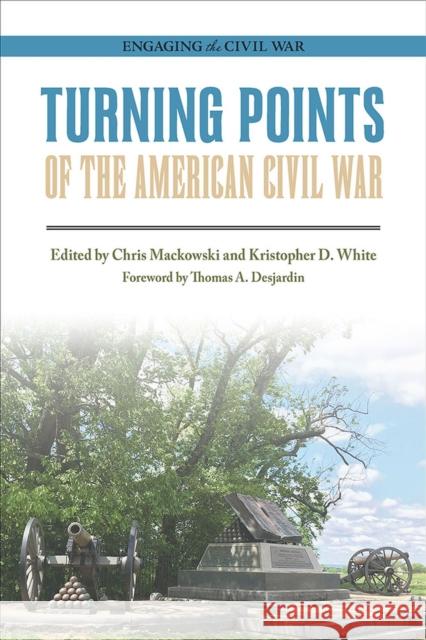
Although most Americans believe that the Battle of Gettysburg was the only turning point of the Civil War, the war actually turned repeatedly. Events unfolded in completely unexpected ways and had unintended consequences. Turning Points of the American Civil War examines key shifts and the context surrounding them, demonstrating that the war was a continuum of watershed events. The contributors show that many chains of events caused the course of the war to change: the Federal defeats at First Bull Run and Ball's Bluff, the wounding of Joseph Johnston at Seven Pines and the...
Although most Americans believe that the Battle of Gettysburg was the only turning point of the Civil War, the war actually turned repeatedly. Events ...

Recounts "The Great Battle Never Fought," the Mine Run Campaign of 1863. It is the final chapter of the forgotten fall of 1863--when George Gordon Meade made one final attempt to save the Union.
Recounts "The Great Battle Never Fought," the Mine Run Campaign of 1863. It is the final chapter of the forgotten fall of 1863--when George Gordon Mea...