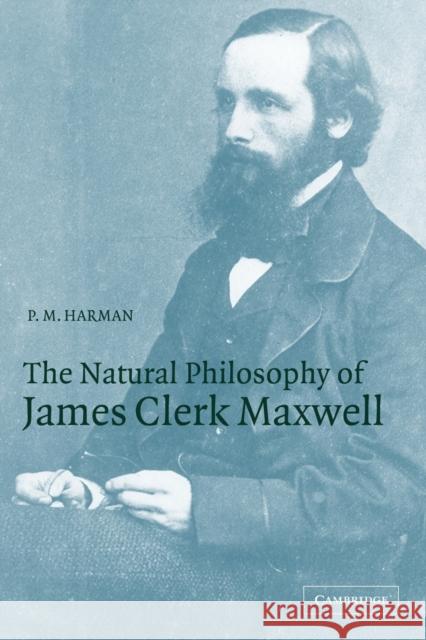
This book provides an introductory yet comprehensive account of James Clerk Maxwell's (1831-79) physics and world view. The argument is structured by a focus on the fundamental themes that shaped Maxwell's science: analogy and geometry, models and mechanical explanation, statistical representation and the limitations of dynamical reasoning, and the relation between physical theory and its mathematical description. This approach, which considers his physics as a whole, bridges the disjunction between Maxwell's greatest contributions: the concept of the electromagnetic field and the kinetic...
This book provides an introductory yet comprehensive account of James Clerk Maxwell's (1831-79) physics and world view. The argument is structured by ...
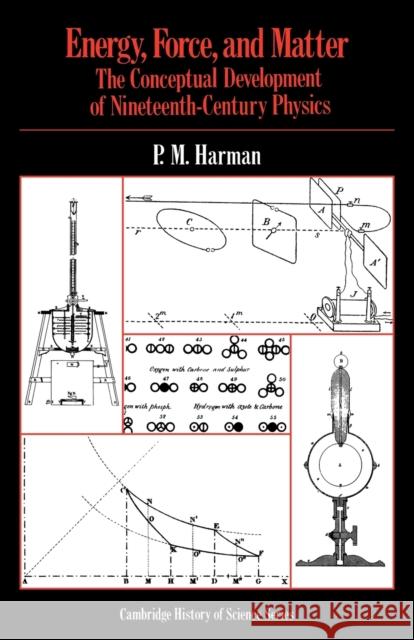
By focusing on the conceptual issues faced by nineteenth century physicists, this book clarifies the status of field theory, the ether, and thermodynamics in the work of the period. A remarkably synthetic account of a difficult and fragmentary period in scientific development.
By focusing on the conceptual issues faced by nineteenth century physicists, this book clarifies the status of field theory, the ether, and thermodyna...
This book is a collection of twenty original essays on the history of science and mathematics, written in honor of D.T. Whiteside. The topics covered embrace the main themes of Whiteside's scholarly work, emphasizing Newtonian topics including: mathematics and astronomy, Newton's manuscripts, Newton's Principia, Newton and eighteenth-century mathematics and physics, and optics and dynamics after Newton. The focus of these themes gives the volume considerable coherence, and these essays make available important original work on Newton and the history of the exact sciences.
This book is a collection of twenty original essays on the history of science and mathematics, written in honor of D.T. Whiteside. The topics covered ...
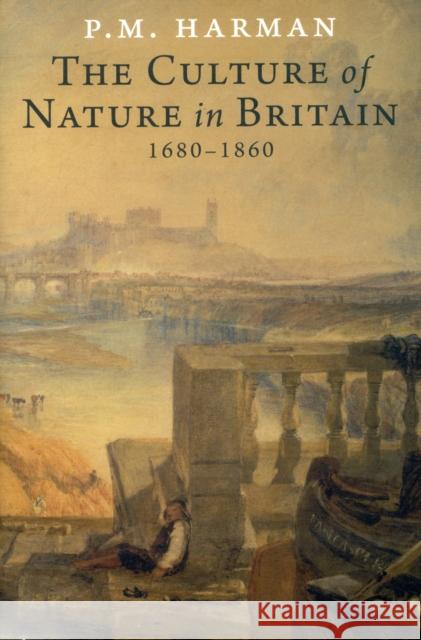
This wide-ranging book investigates the emergence of modern ideas about the natural world in Britain from 1680-1860 through an examination of the cultural values common to the sciences, art, literature, and natural theology. During this critical period, spanned by Newtonian science, natural theology, Darwin's Origin of Species, and Ruskin's Modern Painters, the fundamental conception of nature and humanity's place within it changed.
P. M. Harman calls for a new understanding of the varied ways in which the British comprehended natural beauty, from the...
This wide-ranging book investigates the emergence of modern ideas about the natural world in Britain from 1680-1860 through an examination of the c...