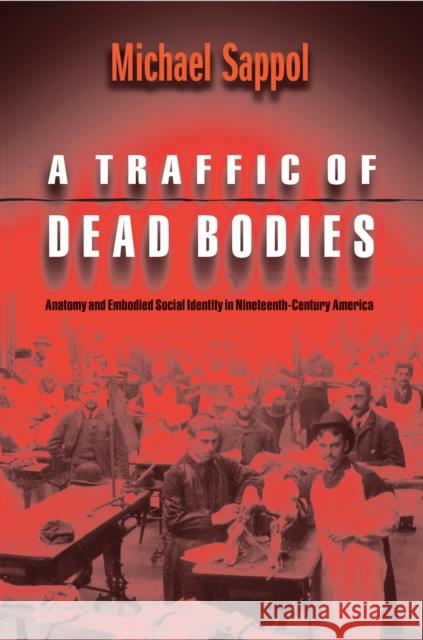
A Traffic of Dead Bodies enters the sphere of bodysnatching medical students, dissection-room pranks, and anatomical fantasy. It shows how nineteenth-century American physicians used anatomy to develop a vital professional identity, while claiming authority over the living and the dead. It also introduces the middle-class women and men, working people, unorthodox healers, cultural radicals, entrepreneurs, and health reformers who resisted and exploited anatomy to articulate their own social identities and visions.
The nineteenth century saw the rise of the American...
A Traffic of Dead Bodies enters the sphere of bodysnatching medical students, dissection-room pranks, and anatomical fantasy. It shows ...
A poster first printed in Germany in 1926 depicts the human body as a factory populated by tiny workers doing industrial tasks. Devised by Fritz Kahn (1888-1968), a German-Jewish physician and popular science writer, "Der Mensch als Industriepalast" (or "Man as Industrial Palace") achieved international fame and was reprinted, in various languages and versions, all over the world. It was a new kind of image--an illustration that was conceptual and scientific, a visual explanation of how things work--and Kahn built a career of this new genre. In collaboration with a stable of artists (only...
A poster first printed in Germany in 1926 depicts the human body as a factory populated by tiny workers doing industrial tasks. Devised by Fritz Ka...