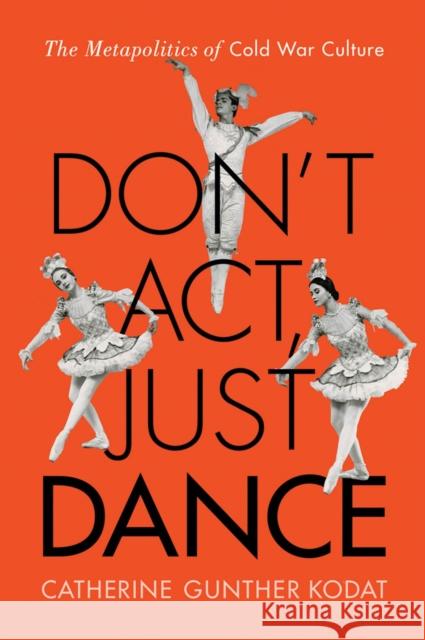
At some point in their career, nearly all the dancers who worked with George Balanchine were told "don't act, dear; just dance." The dancers understood this as a warning against melodramatic over-interpretation and an assurance that they had all the tools they needed to do justice to the steps--but its implication that to dance is already to act in a manner both complete and sufficient resonates beyond stage and studio. Drawing on fresh archival material, Don't Act, Just Dance places dance at the center of the story of the relationship between Cold War art and politics. Catherine...
At some point in their career, nearly all the dancers who worked with George Balanchine were told "don't act, dear; just dance." The dancers understoo...
At some point in their career, nearly all the dancers who worked with George Balanchine were told "don't act, dear; just dance." The dancers understood this as a warning against melodramatic over-interpretation and an assurance that they had all the tools they needed to do justice to the steps--but its implication that to dance is already to act in a manner both complete and sufficient resonates beyond stage and studio. Drawing on fresh archival material, Don't Act, Just Dance places dance at the center of the story of the relationship between Cold War art and politics. Catherine...
At some point in their career, nearly all the dancers who worked with George Balanchine were told "don't act, dear; just dance." The dancers understoo...