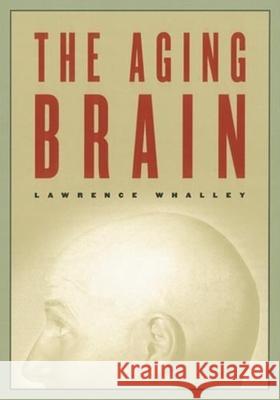
Why do some people remain alert and vigorous at an age when others are declining mentally and physically? Does their apparent advantage have a biological basis, and, if so, could this success be transferred to others predisposed to age more quickly? If this is achievable, does brain aging then become the last obstacle to an extension of our useful life span? These are just some of the questions answered in this fascinating book by Lawrence Whalley, a researcher who specializes in the study of Alzheimer's disease. He relates that the brain may be able to compensate for its own aging since...
Why do some people remain alert and vigorous at an age when others are declining mentally and physically? Does their apparent advantage have a biologi...
Why do some people remain alert and vigorous at an age when others are declining mentally and physically? Does their apparent advantage have a biological basis, and, if so, could this success be transferred to others predisposed to age more quickly? If this is achievable, does brain aging then become the last obstacle to an extension of our useful life span? These are just some of the questions answered in this fascinating book by Lawrence Whalley, a researcher who specializes in the study of Alzheimer's disease. He relates that the brain may be able to compensate for its own aging since...
Why do some people remain alert and vigorous at an age when others are declining mentally and physically? Does their apparent advantage have a biologi...