This volume presents a cross-section of the most common transport vehicles produced and used by the German army. Tanks plus auxiliary vehicles such as cars, motorcycles, vans, ambulances, trucks and tractors made it possible for the troops to keep moving. These lightly armored or unarmored vehicles--aka "soft skins"--operated behind the front lines, maintaining supply lines, connecting armies with their home bases, and ultimately determining the outcome of battle. Beginning with the development of military vehicles in the early 1930s, this volume discusses the ways in which this new...
This volume presents a cross-section of the most common transport vehicles produced and used by the German army. Tanks plus auxiliary vehicles such as...
This book gives the reader a straightforward and continuous survey of the history of the French Foreign Legion. By outlining the Legions vicissitudes, victorious campaigns, epic marches, heroic and sometimes hopeless stands, dirtiest combats and dramatic defeats, but also by briefly placing the Legion back in the historical background of France, and by describing its development, organization, uniforms, equipments and weapons, the author hopes to dispel myths, and try to give a true and accurate picture of what the French Foreign Legion has been from 1831 until today.
This book gives the reader a straightforward and continuous survey of the history of the French Foreign Legion. By outlining the Legions vicissitudes,...
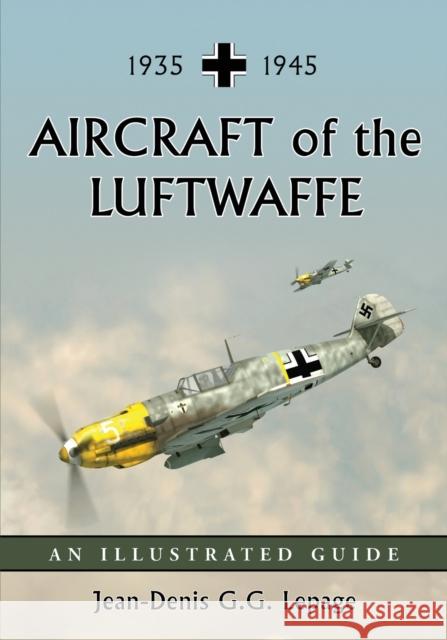
This text covers the history and development of the German air force from 1935 to 1945, with descriptions and illustrations of almost all of the Luftwaffe's airplanes and helicopters, and many futuristic projects and other rarities.
This text covers the history and development of the German air force from 1935 to 1945, with descriptions and illustrations of almost all of the Luftw...
During the Nazi regime's swift rise to power, no single target of nazification took higher priority than Germany's young people. Well aware that the Nazi party could thrive only through the support of future generations, Hitler instituted a youth movement, the Hitler Jugend (Hitler Youth), which indoctrinated the easily malleable students of Germany's schools and universities. Along with its female counterpart, the Bund deutscher Madel (League of German Girls), the Hitler Youth produced many thousands of young Germans who were deeply and fanatically imbued with the Nazi racist...
During the Nazi regime's swift rise to power, no single target of nazification took higher priority than Germany's young people. Well aware that the N...
This book describes and illustrates French fortifications from 1715 (the death of Louis XIV) to 1815 (the fall of Napoleon), focusing particularly on the Napoleonic era. After an historical background, it covers the heritage of the Ancien Regime with the important contributions of Vauban (the bastioned defense), Gribeauval's reforms in artillery, and Montalembert's innovations. Chapters explore the style of Napoleonic fortifications, siege warfare, artillery and engineering corps, as well as the Napoleonic achievements in France, Italy, German and the Netherlands, including projects that were...
This book describes and illustrates French fortifications from 1715 (the death of Louis XIV) to 1815 (the fall of Napoleon), focusing particularly on ...
A man of genuine inventiveness, versatility and reformist ideas, Marshal Sebastien Le Preste de Vauban built a formidable ring of fortresses to protect Franc's national frontiers. This book tells the story of Vauban's career, placing his lifework within the background of Louis XIV's reign and revealing his influences in France and other nations.
A man of genuine inventiveness, versatility and reformist ideas, Marshal Sebastien Le Preste de Vauban built a formidable ring of fortresses to protec...
From the time the Romans first set foot on England's shore in 55 BC, the British Isles have faced a constant threat of foreign invasion. As a result, the landscapes of England, Scotland, and Ireland are dotted with ancient defensive fortifications as varied as their makers. Iron Age Celtic hillforts, Roman castra and Hadrian's Wall, Anglo-Saxon dykes and Alfredian burhs, Norman mottes and stone-keeps, Edwardian castles, Irish tower houses--they all served to repel ancient intruders and many still stand as tangible relics of a remarkable past. This study chronicles the development of British...
From the time the Romans first set foot on England's shore in 55 BC, the British Isles have faced a constant threat of foreign invasion. As a result, ...
The story of Hitler's Wehrmachtsgefolge (armed forces auxiliaries) is less well known than that of Germany's other armed forces in World War II, such as the panzer divisions, the Luftwaffe and the Kriegsmarine. The Organization Todt (construction company), Reichsarbeitsdienst (labor service), Nationalsozialistische Kraftfahrer Korps (driver's corp) and Volkssturm (people's militia) were given the status of armed forces auxiliaries to protect their members under the Geneva Conventions should they be taken prisoner. By 1944, the Wehrmachtsgefolge comprised 40 percent of the German armed forces,...
The story of Hitler's Wehrmachtsgefolge (armed forces auxiliaries) is less well known than that of Germany's other armed forces in World War II, such ...