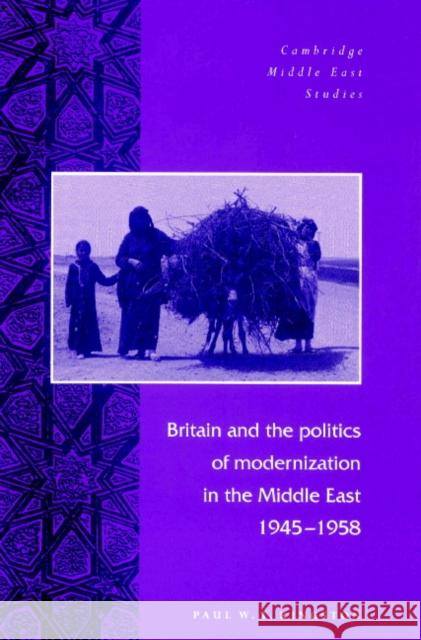
Paul W. T. Kingston Charles Tripp Julia A. Clancy-Smith
In an historically informed critique of development assistance, Paul Kingston examines Britain's foreign aid program in the Middle East in the 1940s and 1950s. Focusing on the debates among British experts, their American rivals, and Middle Eastern technocrats over development policy, the author raises important questions about the nature of the development process in the Middle East and Third World generally. The book will be of interest to development practitioners and to scholars in development studies, as well as to students of Middle East and imperial history.
In an historically informed critique of development assistance, Paul Kingston examines Britain's foreign aid program in the Middle East in the 1940s a...
The Arab Spring in Tunisia, Egypt, Libya, and elsewhere has highlighted the growing importance of the politics of civil society in the contemporary Middle East. In Reproducing Sectarianism, Paul W. T. Kingston examines rights-oriented advocacy networks within Lebanon's postwar civil society, focusing on movements and political campaigns based on gender relations, the environment, and disability. Set within Lebanon's postwar sectarian democracy, whose factionalizing dynamics have long penetrated the country's civil society, Kingston's fascinating study provides an in-depth analysis of...
The Arab Spring in Tunisia, Egypt, Libya, and elsewhere has highlighted the growing importance of the politics of civil society in the contemporary Mi...