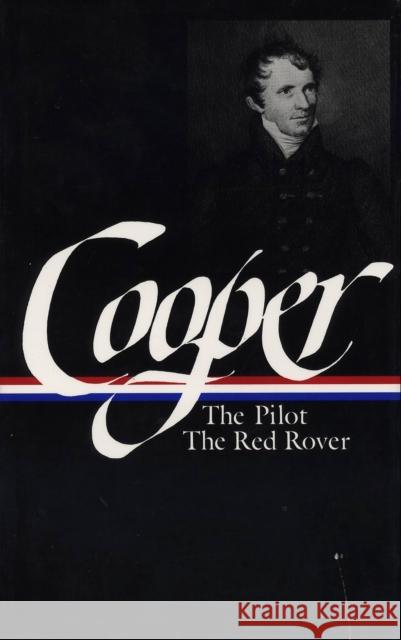
James Fenimore Cooper Kay S. House Thomas L. Philbrick
The library of America is dedicated to publishing America's best and most significant writing in handsome, enduring volumes, featuring authoritative texts. Hailed as the "finest-looking, longest-lasting editions ever made" (The New Republic), Library of America volumes make a fine gift for any occasion. Now, with exactly one hundred volumes to choose from, there is a perfect gift for everyone.
The library of America is dedicated to publishing America's best and most significant writing in handsome, enduring volumes, featuring authoritative t...
Samuel Parris James Fenimore Cooper Kenneth P. Minkema
This is the sermon notebook of the pastor of the local church in Salem at the time of the notorious witchcraft hysteria of 1692-93. These sermons were preached from his ordination in 1689, through the summer of trials and executions in 1692, and on into the aftermath of the controversy.
This is the sermon notebook of the pastor of the local church in Salem at the time of the notorious witchcraft hysteria of 1692-93. These sermons were...
The Oak Openings - the last of Cooper's twelve Indian tales - was commenced on New Year's day of 1848, and written in the course of the following winter and spring. James Fenimore Cooper (1789-1851) was an American novelist, travel writer, and social critic, regarded as the first great American writer of fiction. He was famed for his action-packed plots and his vivid, if somewhat idealized, portrayal of American life in the forest and at sea.
The Oak Openings - the last of Cooper's twelve Indian tales - was commenced on New Year's day of 1848, and written in the course of the following wint...
Lionel Lincoln presented Cooper with the problems of writing a Revolutionary tale with a Loyalist American hero, and of two mentally disordered characters; as part of his intention for a Revolutionary series. The author himself was dissatisfied with his work. In his own opinion, a tale connected with the wonderful siege of Boston, and the memorable battle of Bunker Hill, should have presented some more striking character to the reader than that of Lionel Lincoln. James Fenimore Cooper (1789-1851) was an American novelist, travel writer, and social critic, regarded as the first great American...
Lionel Lincoln presented Cooper with the problems of writing a Revolutionary tale with a Loyalist American hero, and of two mentally disordered charac...
The Ways of the Hour was James Fenimore Cooper's last novel, published in 1850. Set in a rural New York county seat outside New York City, it is a courtroom drama of a woman accused of murder and theft, and of the men and women who defend her case. The surprise ending is perhaps as unexpected as any in crime fiction. Cooper used the novel, among other things, to express his discontent with changes in New York State's judicial system during the 1840s, with the corruption of courts and juries, and with new ideas of women's rights. The accused woman, Mary Monson, is a notable character in her...
The Ways of the Hour was James Fenimore Cooper's last novel, published in 1850. Set in a rural New York county seat outside New York City, it is a cou...
These introductory to her father's novel was written by his daughter, Susan Fenimore Cooper: "On the 25th of August, 1820, it was published by Mr. A. T. Goodrich, of New York, under the title of Precaution; or, Prevention is Better than Cure. The original publications of a New York house of that day were, of course, very few in number. The book attracted a degree of attention. Its literary merits were considered respectable, though not in the least brilliant. The characters were declared natural, and the moral tone was pronounced excellent. Quite as a matter of course, it was supposed, at...
These introductory to her father's novel was written by his daughter, Susan Fenimore Cooper: "On the 25th of August, 1820, it was published by Mr. A. ...
"The summer of 1828 was passed in Switzerland. Those were very happy months. The sublime grandeur of the ancient mountains, and the loveliness of the pastoral valleys at their feet, far surpassed in the reality all previous conceptions of the same nature. ... At the foot of the Alps, a new book was planned. Mind and memory, however, turned affectionately westward; and scenes of home-life, incidents connected with the annals of his native soil, formed once more the materials selected for the work. As usual, it was no sooner planned than the first pages were written. The period and ground...
"The summer of 1828 was passed in Switzerland. Those were very happy months. The sublime grandeur of the ancient mountains, and the loveliness of the ...