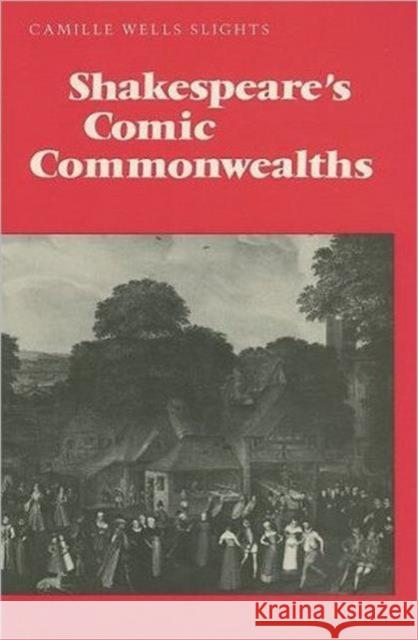
Challenging the traditional view that Shakespeare's early comedies are about the experience of romantic love and constitute a genre called romantic comedy, Camille Wells Slights demonstrates that they dramatize individual action in the context of social dynamics, reflecting and commenting on the culture in which they originated. Shakespeare's Comic Commonwealths sheds new light on ten Shakespearean comedies: The Comedy of Errors, The Taming of the Shrew, The Two Gentlemen of Verona, Love's Labor's Lost, A Midsummer Night's Dream, The Merchant of Venice, The Merry Wives of...
Challenging the traditional view that Shakespeare's early comedies are about the experience of romantic love and constitute a genre called romantic...
Challenging the traditional view that Shakespeare's early comedies are about the experience of romantic love and constitute a genre called romantic comedy, Camille Wells Slights demonstrates that they dramatize individual action in the context of social dynamics, reflecting and commenting on the culture in which they originated. Shakespeare's Comic Commonwealths sheds new light on ten Shakespearean comedies: The Comedy of Errors, The Taming of the Shrew, The Two Gentlemen of Verona, Love's Labor's Lost, A Midsummer Night's Dream, The Merchant of Venice, The Merry Wives of...
Challenging the traditional view that Shakespeare's early comedies are about the experience of romantic love and constitute a genre called romantic...
To show how the casuistical tradition illuminates the study of major literary works in the English Renaissance, Camille Slights traces the emergence of casuistry in the sixteenth and seventeenth centuries and discusses its influence on the moral imaginations of Shakespeare, Donne, Herbert, and Milton.
Originally published in 1981.
The Princeton Legacy Library uses the latest print-on-demand technology to again make available previously out-of-print books from the distinguished backlist of Princeton University Press. These editions preserve the original texts of these...
To show how the casuistical tradition illuminates the study of major literary works in the English Renaissance, Camille Slights traces the emergenc...
To show how the casuistical tradition illuminates the study of major literary works in the English Renaissance, Camille Slights traces the emergence of casuistry in the sixteenth and seventeenth centuries and discusses its influence on the moral imaginations of Shakespeare, Donne, Herbert, and Milton.
Originally published in 1981.
The Princeton Legacy Library uses the latest print-on-demand technology to again make available previously out-of-print books from the distinguished backlist of Princeton University Press. These editions preserve the original texts of these...
To show how the casuistical tradition illuminates the study of major literary works in the English Renaissance, Camille Slights traces the emergenc...