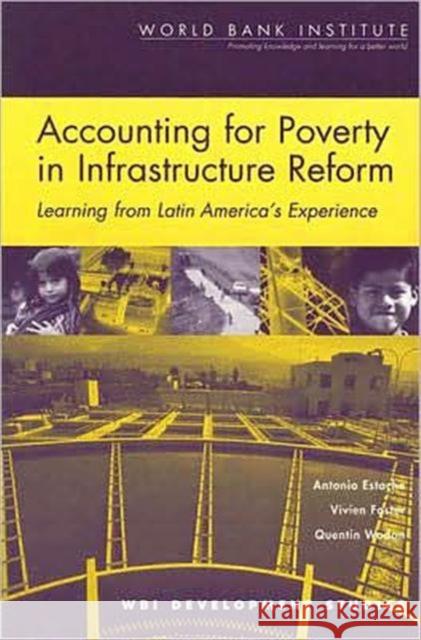
During the 1990's a number of countries in Latin America including Argentina, Bolivia and Chile, developed policies focused on utility sector liberalization through increased private sector participation. This focus resulted from the recognition that overall quality and availability of services were inadequate. Infrastructure reform is inexorably linked to poverty alleviation and therefore must be carefully constructed and enacted. This book provides practical guidelines and options for infrastructure reform that result in access and affordability for the poor. Accounting for Poverty in...
During the 1990's a number of countries in Latin America including Argentina, Bolivia and Chile, developed policies focused on utility sector liberali...
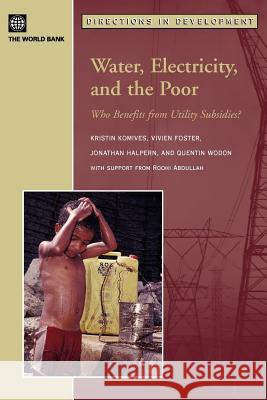
While consumer utility subsidies are widespread in both the water and electricity sectors, their effectiveness in reaching and distributing resources to the poor is the subject of much debate. 'Water, Electricity, and the Poor' brings together empirical evidence on subsidy performance across a wide range of countries. It documents the prevalence of consumer subsidies, provides a typology of the many variants found in the developing world, and presents a number of indicators useful in assessing the degree to which such subsidies benefit the poor, focusing on three key concepts: beneficiary...
While consumer utility subsidies are widespread in both the water and electricity sectors, their effectiveness in reaching and distributing resources ...
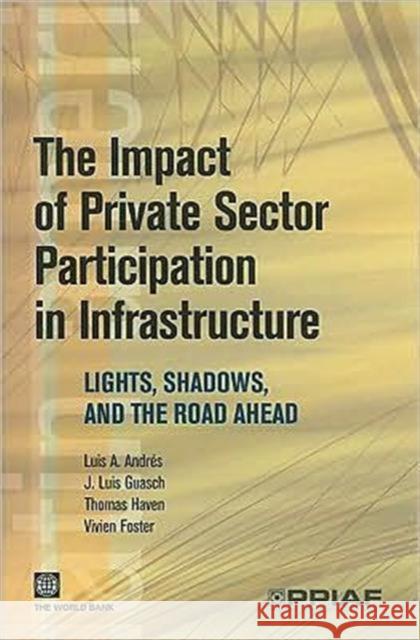
Infrastructure plays a key role in fostering growth and productivity and has been linked to improved earnings, health, and education levels for the poor. Yet Latin America and the Caribbean are currently faced with a dangerous combination of relatively low public and private infrastructure investment. Those investment levels must increase, and it can be done. If Latin American and Caribbean governments are to increase infrastructure investment in politically feasible ways, it is critical that they learn from experience and have an accurate idea of future impacts. This book contributes to this...
Infrastructure plays a key role in fostering growth and productivity and has been linked to improved earnings, health, and education levels for the po...
Depuis quelques annees, un certain nombre d economies emergentes jouent un role croissant dans le financement des infrastructures en Afrique subsaharienne. Globalement, leurs flux de capitaux sont maintenant d une ampleur comparable a l aide publique au developpement classique des pays de l Organisation de cooperation et de developpement economiques (OCDE) ou aux apports financiers des investisseurs prives. Ces bailleurs de fonds non membres de l OCDE incluent notamment la Chine, l Inde et les Etats du Golfe, la Chine etant de loin l acteur le plus important. Malgre l importance des capitaux...
Depuis quelques annees, un certain nombre d economies emergentes jouent un role croissant dans le financement des infrastructures en Afrique subsahari...