Isamu Noguchi, born in Los Angeles as the illegitimate son of an American mother and a Japanese poet father, was one of the most prolific yet enigmatic figures in the history of twentieth-century American art. Throughout his life, Noguchi (1904-1988) grappled with the ambiguity of his identity as an artist caught up in two cultures.
His personal struggles--as well as his many personal triumphs--are vividly chronicled in The Life of Isamu Noguchi, the first full-length biography of this remarkable artist. Published in connection with the centennial of the artist's birth,...
Isamu Noguchi, born in Los Angeles as the illegitimate son of an American mother and a Japanese poet father, was one of the most prolific yet enigm...
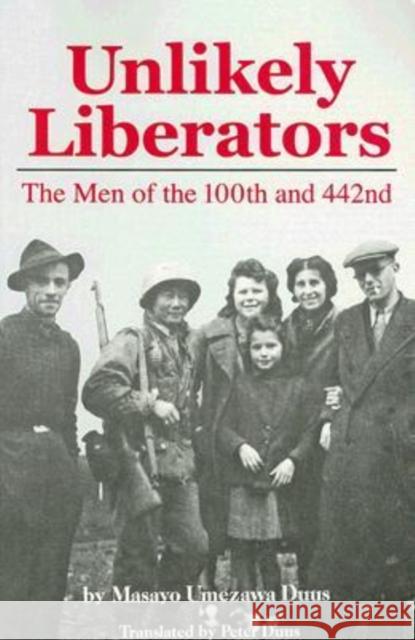
Unlikely Liberators is the action-filled story of the men of the 100th Battalion and the 442nd Regimental Combat Team. Not trusted to fight in the Pacific, these sons of Japanese immigrants were sent instead to the European theater. In the eyes of their own government and the Europeans they liberated, they were an unlikely group of fighting men. They nevertheless engaged the enemy with astonishing heroism, winning battle after battle at Anzio, Salerno, Cassino, and in the Vosges Mountains. At the end of the war, the 100th and the 442nd emerged as America's most decorated units. They...
Unlikely Liberators is the action-filled story of the men of the 100th Battalion and the 442nd Regimental Combat Team. Not trusted to fight in the ...
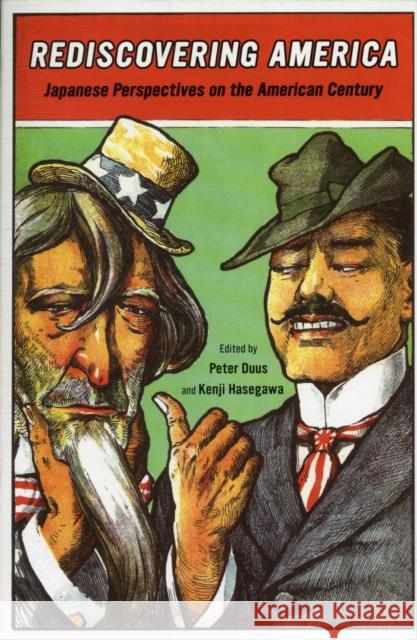
In this extraordinary collection of writings, covering the period from 1878 to 1989, a wide range of Japanese visitors to the United States offer their vivid, and sometimes surprising perspectives on Americans and American society. Peter Duus and Kenji Hasegawa have selected essays and articles by Japanese from many walks of life: writers and academics, bureaucrats and priests, politicians and journalists, businessmen, philanthropists, artists. Their views often reflect power relations between America and Japan, particularly during the wartime and postwar periods, but all of them dealt with...
In this extraordinary collection of writings, covering the period from 1878 to 1989, a wide range of Japanese visitors to the United States offer thei...
In this extraordinary collection of writings, covering the period from 1878 to 1989, a wide range of Japanese visitors to the United States offer their vivid, and sometimes surprising perspectives on Americans and American society. Peter Duus and Kenji Hasegawa have selected essays and articles by Japanese from many walks of life: writers and academics, bureaucrats and priests, politicians and journalists, businessmen, philanthropists, artists. Their views often reflect power relations between America and Japan, particularly during the wartime and postwar periods, but all of them dealt with...
In this extraordinary collection of writings, covering the period from 1878 to 1989, a wide range of Japanese visitors to the United States offer thei...
Building upon a previous study of Japan's colonial empire, this volume examines the period from 1895 to 1937 when Japan's economic, social, political, and military influence in China expanded so rapidly that it supplanted the influence of Western powers competing there. These fourteen essays discuss how Japan's "informal empire" emerged in China and how that "empire" influenced Japan's own internal development. "Describes in rich detail Japan's organization of a wide range of cultural, educational, economic, military, and bureaucratic institutions that formed the mainstays of Japanese...
Building upon a previous study of Japan's colonial empire, this volume examines the period from 1895 to 1937 when Japan's economic, social, politic...