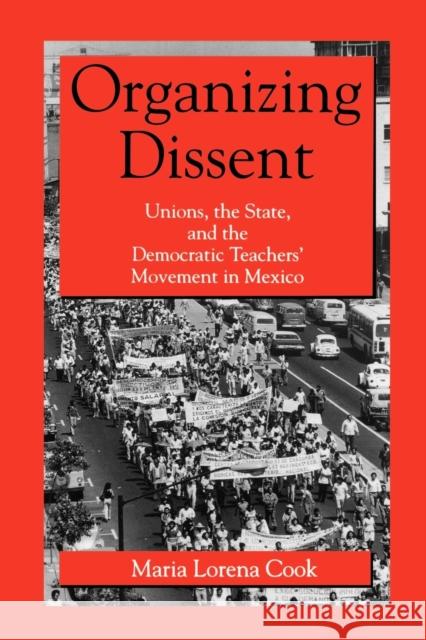
Organizing Dissent examines the democratic movement that emerged in the 1970s and 1980s within Mexico's National Union of Education Workers, the largest union in Latin America. The size, perseverance, and success the movement stood out in a country whose governing regime was renowned for its ability to co-opt, control, and repress dissent.
Maria Lorena Cook analyzes the development of the teachers' movement from its origins in the 1970s through the economic crisis 0f the 1980s and into the early 1990s under the Salinas administration. She explores the evolving relationship...
Organizing Dissent examines the democratic movement that emerged in the 1970s and 1980s within Mexico's National Union of Education Worker...
During the 1990s, governments, employers, and international agencies pressed for greater flexibility in labor regulations throughout much of Latin America. In this comparative study of six Latin American countries, Maria Lorena Cook shows why these common pressures for flexibility led to varied labor reform outcomes. Her examination of the role of organized labor in shaping reform highlights the conditions under which labor can still wield power despite a decline in overall strength.
Cook employs historical case studies and paired comparisons to analyze the political dynamics that...
During the 1990s, governments, employers, and international agencies pressed for greater flexibility in labor regulations throughout much of Latin ...
Democratization in the developing and postcommunist world has yielded limited gains for labor. Explanations for this phenomenon have focused on the effect of economic crisis and globalization on the capacities of unions to become influential political actors and to secure policies that benefit their members. In contrast, the contributors to Working through the Past highlight the critical role that authoritarian legacies play in shaping labor politics in new democracies, providing the first cross-regional analysis of the impact of authoritarianism on labor, focusing on East and...
Democratization in the developing and postcommunist world has yielded limited gains for labor. Explanations for this phenomenon have focused on the...
Democratization in the developing and postcommunist world has yielded limited gains for labor. Explanations for this phenomenon have focused on the effect of economic crisis and globalization on the capacities of unions to become influential political actors and to secure policies that benefit their members. In contrast, the contributors to Working through the Past highlight the critical role that authoritarian legacies play in shaping labor politics in new democracies, providing the first cross-regional analysis of the impact of authoritarianism on labor, focusing on East and...
Democratization in the developing and postcommunist world has yielded limited gains for labor. Explanations for this phenomenon have focused on the...