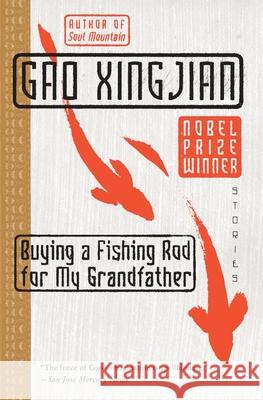
These six stories by Nobel Prize winner Gao Xingjian transport the reader to moments where the fragility of love and life, and the haunting power of memory, are beautifully unveiled. In "The Temple," the narrator's acute and mysterious anxiety overshadows the delirious happiness of an outing with his new wife on their honeymoon. In "The Cramp," a man narrowly escapes drowning in the sea, only to find that no one even noticed his absence. In the titlestory, the narrator attempts to relieve his homesickness only to find that he is lost in a labyrinth of childhood memories.
Everywhere...
These six stories by Nobel Prize winner Gao Xingjian transport the reader to moments where the fragility of love and life, and the haunting power o...
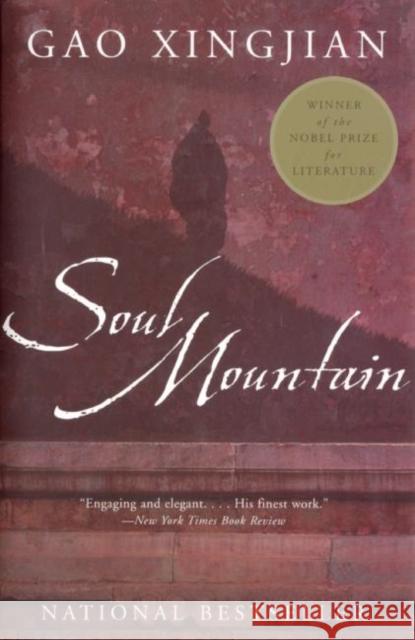
In 1983, Chinese playwright, critic, fiction writer, and painter Gao Xingjian was diagnosed with lung cancer and faced imminent death.But six weeks later, a second examination revealed there was no cancer--he had won "a second reprieve from death." Faced with a repressive cultural environment and the threat of a spell in a prison farm, Gao fled Beijing and began a journey of 15,000 kilometers into the remote mountains and ancient forests of Sichuan in southwest China. The result of this epic voyage of discovery is Soul Mountain.
Bold, lyrical, and prodigious, Soul...
In 1983, Chinese playwright, critic, fiction writer, and painter Gao Xingjian was diagnosed with lung cancer and faced imminent death.But six weeks...
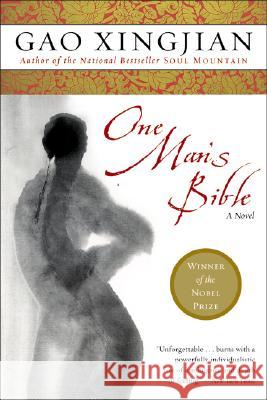
One Man's Bible is a fictionalized account of Gao Xingjian's life under the Chinese Communist regime. Daily life is riddled with paranoia and fear, and government propaganda turns citizens against one another. It is a place where a single sentence spoken ten years earlier can make one an enemy of the state.
But One Man's Bible is also a profound meditation on the essence of writing, on exile, on the effects of political oppression on the human spirit, and on how the human spirit can triumph.
One Man's Bible is a fictionalized account of Gao Xingjian's life under the Chinese Communist regime. Daily life is riddled with paranoia ...
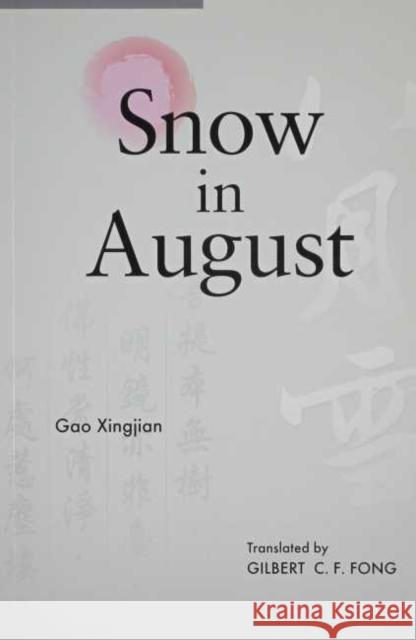
From Gao Xingjian, a winner of the 2000 Nobel Prize for Literature, comes a "major drama about life. Snow in August blends Eastern and Western cultures. In form, there are elements of Shakespearean and Greek tragedy, but in spirit, it embodies a uniquely Eastern sensibility."--Gao Xingjian Snow in August is based on the life of Huineng (AD 633-713), the Sixth Patriarch of Zen Buddhism in Tang Dynasty China. Packed with the myriad sights and sounds of both the Eastern and Western theatrical traditions, the play exudes wonder and mysticism. The many koan cases and...
From Gao Xingjian, a winner of the 2000 Nobel Prize for Literature, comes a "major drama about life. Snow in August blends Eastern and West...