A perceptive study of how Catholic views of revelation can represent a retrieval of important findings from the Enlightenment. Since the Enlightenment, traditional notions of revelation have been critiqued or abandoned entirely. Kaplan examines some of the well-known and lesser-known figures in the Enlightenment and post-Enlightenment, showing that a Catholic retrieval of revelation is possible and even preferable to alternative paths. Major themes and figures include G.E. Lessing, Immanual Kant, Johann Gottlieb Fichte, and Johannes Kuhn, as well as Friedrich Schelling's later, often ignored...
A perceptive study of how Catholic views of revelation can represent a retrieval of important findings from the Enlightenment. Since the Enlightenment...
Offers an opportunity for English-speaking readers to encounter the thought of Johannes Kuhn (1806-1887), widely considered the greatest speculative theologian of the renowned Catholic Tubingen School. This book presents selected essays spanning Kuhn's lengthy career.
Offers an opportunity for English-speaking readers to encounter the thought of Johannes Kuhn (1806-1887), widely considered the greatest speculative t...
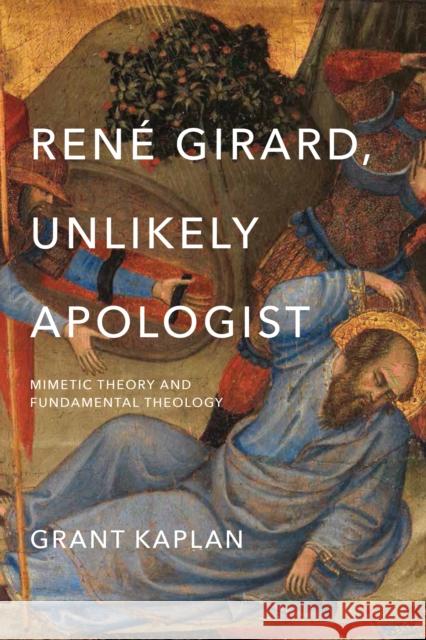
Since the late 1970s, theologians have been attempting to integrate mimetic theory into different fields of theology, yet a distrust of mimetic theory persists in some theological camps. In Rene Girard, Unlikely Apologist: Mimetic Theory and Fundamental Theology, Grant Kaplan brings mimetic theory into conversation with theology both to elucidate the relevance of mimetic theory for the discipline of fundamental theology and to understand the work of Rene Girard within a theological framework. Rather than focus on Christology or atonement theory as the locus of interaction between Girard and...
Since the late 1970s, theologians have been attempting to integrate mimetic theory into different fields of theology, yet a distrust of mimetic theory...