This comprehensive history of the northern frontier of China through the first millennium B.C. details the formation of two increasingly distinct cultural areas: the sedentary Chinese and the northern nomads. Nicola Di Cosmo explores the tensions existing between these two worlds as they became progressively more polarized, with the eventual creation of the nomadic Hsiung-nu empire in the north, and of the Chinese empire in the south. Di Cosmo investigates the origins of the antagonism between early China and its "barbarian" neighbors.
This comprehensive history of the northern frontier of China through the first millennium B.C. details the formation of two increasingly distinct cult...
In the seventeenth century the Manchu conquered the whole of China, replacing the Ming dynasty. The original Manchu and Mongol documents selected for the this publication, translated and amply annotated, provide fascinating new information about the relations between Manchus and Mongols before the Manchu conquest of China. They include diplomatic correspondence, military liaisons, legal cases, and records of tribute missions and present a detailed picture of the relative position of the various Mongol tribes vis-a-vis the future emperors of China.
In the seventeenth century the Manchu conquered the whole of China, replacing the Ming dynasty. The original Manchu and Mongol documents selected for ...
This volume explores the relationship between culture and the military in Chinese society from early China to the Qing empire, with contributions by eminent scholars aiming to reexamine the relationship between military matters and law, government, historiography, art, philosophy, literature, and politics.
The book critically investigates the perception that, due to the influence of Confucianism, Chinese culture has systematically devalued military matters. There was nothing inherently pacifist about the Chinese governments' views of war, and pragmatic approaches--even aggressive...
This volume explores the relationship between culture and the military in Chinese society from early China to the Qing empire, with contributions b...
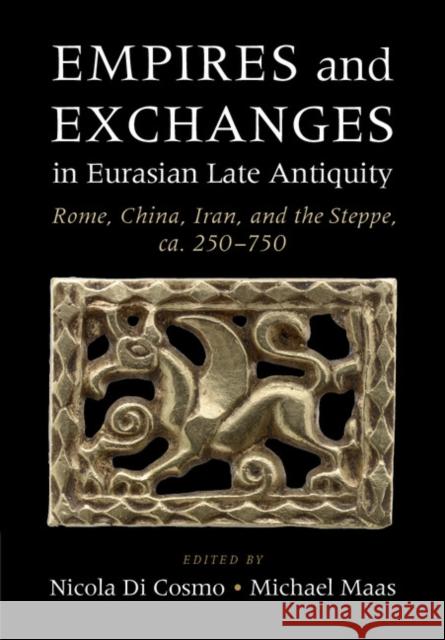
Empires and Exchanges in Eurasian Late Antiquity offers an integrated picture of Rome, China, Iran, and the Steppes during a formative period in world history. It illuminates the interconnections and networks that tied countless local cultural expressions to far-reaching inter-regional ones.
Empires and Exchanges in Eurasian Late Antiquity offers an integrated picture of Rome, China, Iran, and the Steppes during a formative period in world...