Welsh, like the other Celtic languages, is best known amongst linguists for its verb-initial word order and its use of initial consonant mutations. However it has many more characteristics which are of interest to syntacticians. This book, first published in 2007, provides a concise and accessible overview of the major syntactic phenomena of Welsh. A broad variety of topics are covered, including finite and infinitival clauses, noun phrases, agreement and tense, word order, clause structure, dialect variation, and the language's historical Celtic background. Drawing on work carried out in...
Welsh, like the other Celtic languages, is best known amongst linguists for its verb-initial word order and its use of initial consonant mutations. Ho...
The Nicene Creed's powerful summary of Christian faith has stood the test of time, embodying core truths and distinguishing essential Christian teachings from those of lesser importance. As respected thinker and educator David Willis explores the Nicene Creed in this new book, he provides clues for meaningfully interpreting this most ecumenical of church creeds in the twenty-first century.
Writing especially for educated laypeople, advanced students, and theological educators, Willis eloquently links the ancient creed to life today. As he points out, faith is constantly taking different...
The Nicene Creed's powerful summary of Christian faith has stood the test of time, embodying core truths and distinguishing essential Christian teachi...
Do you have to be able to see something to believe that it is real? Is Santa real? That is a question that many people have asked. Peter wanted to know. When he asked the question he got much more of an answer than he ever expected. Come take a trip with Peter and his new friends, Comet the Reindeer and Frosty the Elf, as they travel to the North Pole to uncover the answer to these very questions. Maybe you, like Peter, will come away surprised with what you find. Do You Believe?
Do you have to be able to see something to believe that it is real? Is Santa real? That is a question that many people have asked. Peter wanted to kno...
Welsh, like the other Celtic languages, is best known amongst linguists for its verb-initial word order and its use of initial consonant mutations. However it has many more characteristics which are of interest to syntacticians. This book, first published in 2007, provides a concise and accessible overview of the major syntactic phenomena of Welsh. A broad variety of topics are covered, including finite and infinitival clauses, noun phrases, agreement and tense, word order, clause structure, dialect variation, and the language's historical Celtic background. Drawing on work carried out in...
Welsh, like the other Celtic languages, is best known amongst linguists for its verb-initial word order and its use of initial consonant mutations. Ho...
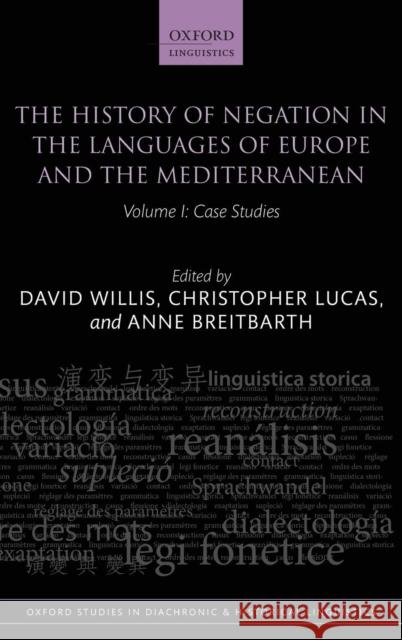
This is the first volume of a two-volume comparative history of negation in the languages of Europe and the Mediterranean. It integrates typological, general, and theoretical research, documents patterns and directions of change in negation across languages, and examines the linguistic and social factors that lie behind such changes.
This is the first volume of a two-volume comparative history of negation in the languages of Europe and the Mediterranean. It integrates typological, ...