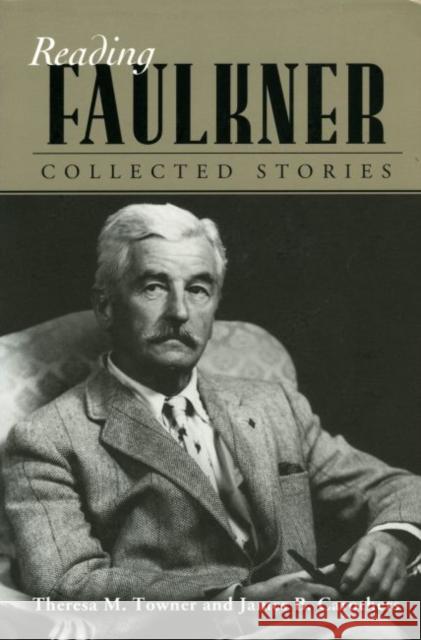
William Faulkner once called the short story -the most demanding form after poetry.- In that form, he achieved splendid success. He wrote over a hundred short stories, published nearly all of them during his lifetime, and has become one of the most frequently anthologized writers in the genre. Countless readers of Faulkner have first entered his world through one of the forty-two doors in Collected Stories.
Reading Faulkner: Collected Stories attempts to make the process of reading America's major modern writer less daunting. It is a useful guide to Faulkner's allusions,...
William Faulkner once called the short story -the most demanding form after poetry.- In that form, he achieved splendid success. He wrote over a hu...
This study argues that Faulkner's writings about racial matters interrogated rather than validated his racial beliefs and that, in the process of questioning his own ideology, his fictional forms extended his reach as an artist.
After winning the Nobel Prize in 1950, Faulkner wrote what critics term -his later novels.- These have been almost uniformly dismissed, with the prevailing view being that as he became a more public figure, his fiction became a platform rather than a canvas.
Within this context Faulkner on the Color Line redeems the novels in the final phase of his...
This study argues that Faulkner's writings about racial matters interrogated rather than validated his racial beliefs and that, in the process of q...