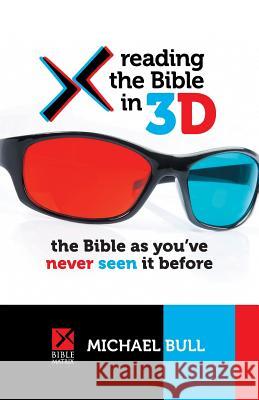
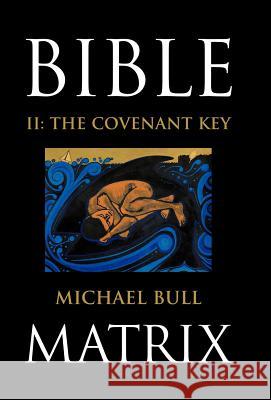
For most people, reading the Bible is like watching a foreign movie with no subtitles. The keys to understanding the book are hidden in plain sight, but we haven't been trained to see them. The Bible is a story. The Bible has a shape. The Bible has a tune. The Bible is art. The Bible is fun. Contemporary culture has been shaping us for a fresh look at the Bible. This amazing book has been biding its time, waiting for a new generation of visual thinkers who are profoundly savvy when it comes to story, poetry and symbolism. This little book will give you your first glimpse of the potential of...
For most people, reading the Bible is like watching a foreign movie with no subtitles. The keys to understanding the book are hidden in plain sight, b...
How foreign the clinical instruments of theology are to the lyrical texts of the Bible At heart, Paul's letter to the Galatians is neither a stream of propositional truth, nor a logical argument. Certainly, it communicates truth in a well-reasoned order, but it does so in a captivating "musical" form. The Apostle arranged all his texts in patterns drawn from the Hebrew Scriptures. Paul not only used words to convey meaning, but conferred greater meaning upon each word and phrase through its placement in relation to every other word and phrase. The literary conventions and historical outcomes...
How foreign the clinical instruments of theology are to the lyrical texts of the Bible At heart, Paul's letter to the Galatians is neither a stream o...
The problem with bad theologians is that they do not think in pictures. The problem with good theologians is that they do not think in moving pictures. Truth is a place to be inhabited and explored, a gallery with walls, doors, and windows. Its objects possess their meaning only in situ. Persons depicted are proposition in process. The Word moves, and the eye is a lens for the heart. Although the Bible is a book with no pictures, it is in fact a book of nothing but pictures, pictures arranged in a careful sequence. The textual flow is motion designed to make an impression. Visualizing while...
The problem with bad theologians is that they do not think in pictures. The problem with good theologians is that they do not think in moving pictures...
The Old Testament is a violent, bloody book, but the more we modern Christians neglect it, the more our gospel loses its teeth.
This little book will call you out, cut you up, lift you up, and set you on fire. It begins where all spiritual meat does: not at the dinner table, not in the kitchen, nor even at the market. It begins in the abattoir. The God of the Old Testament is a butcher only because the Christ of the New Testament is a chef.
Real theology deals with food, with milk and honey, flesh and blood, bread, oil, and wine. It is nourishment for children, wisdom for kings, and...
The Old Testament is a violent, bloody book, but the more we modern Christians neglect it, the more our gospel loses its teeth.
On buses, trains, and streets over the past decade and more, youths in particular but increasingly older people as well tune into their personal stereos and tune out city sounds. Why? What does the personal stereo mean to these people and to urban culture more generally? Does it heighten reality? Enable people to cope? Isolate? Create a space? Combat boredom? Far too commonplace and enduring to be considered a fashion accessory, the personal stereo has become a potent artefact symbolizing contemporary urban life.
This book opens up a new area of urban studies, the auditory experience...
On buses, trains, and streets over the past decade and more, youths in particular but increasingly older people as well tune into their personal st...
The first edition of The Auditory Culture Reader offered an introduction to both classical and recent work on auditory culture, laying the foundations for new academic research in sound studies. Today, interest and research on sound thrives across disciplines such as music, anthropology, geography, sociology and cultural studies as well as within the new interdisciplinary sphere of sound studies itself.
This second edition reflects on the changes to the field since the first edition and offers a vast amount of new content, a user-friendly organization which highlights key...
The first edition of The Auditory Culture Reader offered an introduction to both classical and recent work on auditory culture, laying the f...
This innovative study opens up a new area in sociological and urban studies: the aural experience of the social, mediated through mobile technologies of communication.
Whilst we live in a world dominated by visual epistemologies of urban experience, Michael Bull argues that it is not surprising that the Apple iPod, a sound based technology, is the first consumer cultural icon of the twenty-first century. This book, in using the example of the Apple iPod, investigates the way in which we use sound to construct key areas of our daily lives. The author argues that the...
This innovative study opens up a new area in sociological and urban studies: the aural experience of the social, mediated through mobile technologi...
On buses, trains, and streets over the past decade and more, youths in particular but increasingly older people as well tune into their personal stereos and tune out city sounds. Why? What does the personal stereo mean to these people and to urban culture more generally? Does it heighten reality? Enable people to cope? Isolate? Create a space? Combat boredom? Far too commonplace and enduring to be considered a fashion accessory, the personal stereo has become a potent artefact symbolizing contemporary urban life.
This book opens up a new area of urban studies, the auditory experience...
On buses, trains, and streets over the past decade and more, youths in particular but increasingly older people as well tune into their personal st...