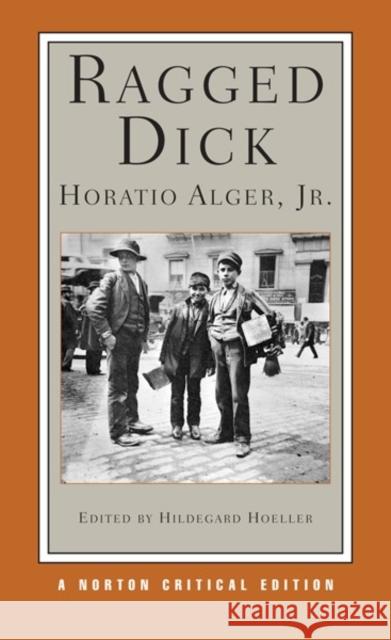
It is canonical as a cultural text, rather than a purely literary one, as this Norton Critical Edition reflects. An extensive "Contexts" section includes maps, photographs, and documents showing how and why Alger used the backdrop of New York City to highlight problems of urban poverty, immigration, and child labor in mid-nineteenth century America. "Criticism" is thematically organized around contemporary reviews and responses, the heated public debate about whether Alger should be available in American public libraries, parodies of and related responses to Alger, and four recent critical...
It is canonical as a cultural text, rather than a purely literary one, as this Norton Critical Edition reflects. An extensive "Contexts" section inclu...
Arguing against the prevailing view of Edith Wharton as a realist writer, Hildegard Hoeller finds the real Wharton in the writer's sentimental voice and in her critique of realism. She demonstrates that the American writer created a dialogue between the two literary traditions.
Arguing against the prevailing view of Edith Wharton as a realist writer, Hildegard Hoeller finds the real Wharton in the writer's sentimental voice a...
In this rich interdisciplinary study, Hildegard Hoeller argues that nineteenth-century American culture was driven by and deeply occupied with the tension between gift and market exchange. Rooting her analysis in the period's fiction, she shows how American novelists from Hannah Foster to Frank Norris grappled with the role of the gift based on trust, social bonds, and faith in an increasingly capitalist culture based on self-interest, market transactions, and economic reason. Placing the notion of sacrifice at the center of her discussion, Hoeller taps into the poignant discourse of modes of...
In this rich interdisciplinary study, Hildegard Hoeller argues that nineteenth-century American culture was driven by and deeply occupied with the ten...
In this rich interdisciplinary study, Hildegard Hoeller argues that nineteenth-century American culture was driven by and deeply occupied with the tension between gift and market exchange. Rooting her analysis in the period's fiction, she shows how American novelists from Hannah Foster to Frank Norris grappled with the role of the gift based on trust, social bonds, and faith in an increasingly capitalist culture based on self-interest, market transactions, and economic reason. Placing the notion of sacrifice at the center of her discussion, Hoeller taps into the poignant discourse of modes of...
In this rich interdisciplinary study, Hildegard Hoeller argues that nineteenth-century American culture was driven by and deeply occupied with the ten...