John L. Ward is a leading world expert on the family business. In this book he brings together a vast amount of experience to show the, 'best practices' of the most successful and long-lasting families in business. He provides a framework of five insights and four principles in which to position his 50 lessons for family businesses. This is the most comprehensive book on sustaining the family business and contains international examples and cases and essential tools and checklists of best practice.
John L. Ward is a leading world expert on the family business. In this book he brings together a vast amount of experience to show the, 'best practice...
The family business has been the most prevalent and pervasive form of business in many countries and raises particular questions concerning succession and governance and in particular the relationships between management, board members and family members. This book is a collection of articles by leading thinkers and practitioners on the family business which covers such issues as assuring a healthy family business, family strategy, governance and succession
The family business has been the most prevalent and pervasive form of business in many countries and raises particular questions concerning succession...
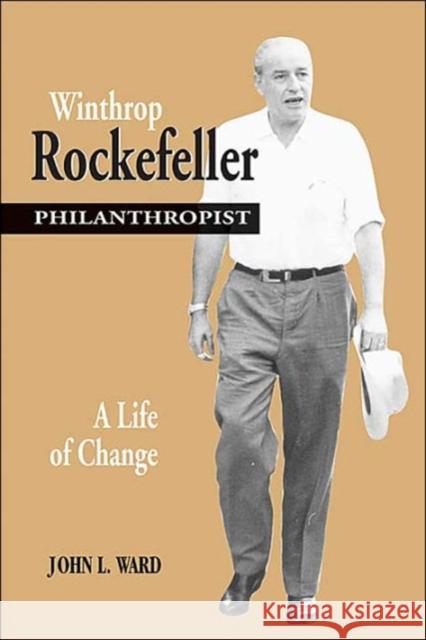
As grandson of oil tycoon John D. Rockefeller Sr. and son of philanthropist John D. Jr., Winthrop Rockefeller was born into one of the most affluent and influential families in the world. But he was a nonconformist and often felt isolated from the rest of his family. Still, he amazed many when he left the New York elite for a farm in rural Arkansas, where he would ultimately serve two terms as governor and create a philanthropic legacy all his own. In Winthrop Rockefeller, Philanthropist, John L. Ward draws from his years as Rockefeller's speech writer and campaign advisor to create a...
As grandson of oil tycoon John D. Rockefeller Sr. and son of philanthropist John D. Jr., Winthrop Rockefeller was born into one of the most affluent a...
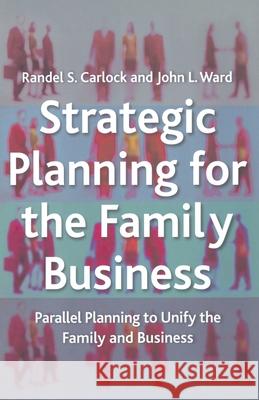
Family business planning has traditionally centered on two issues - estate planning and succession. These goals are far too limited for today's family firm. Business families want to turn the business into not only a tool for profit, but for self-expression, innovation and legacy. The authors introduce the new concept of the Parallel Planning Process, explaining how to integrate the needs and expectations of the family and business systems in order to create an organic and entrepreneurial unit. Planning and decision making templates are included as well as studies of well-known family...
Family business planning has traditionally centered on two issues - estate planning and succession. These goals are far too limited for today's family...
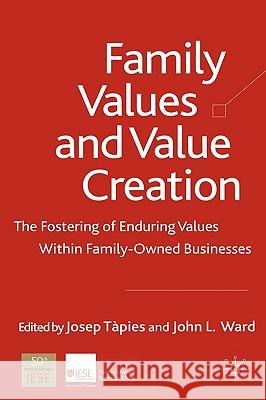
In celebration of IESE's 50 years of bridging the gap between theory and practice, this essential compilation brings together today's top researchers to tackle the real-life issues that family business owners face on a daily basis, shedding new light on the values that shape these special types of companies.
In celebration of IESE's 50 years of bridging the gap between theory and practice, this essential compilation brings together today's top researchers ...
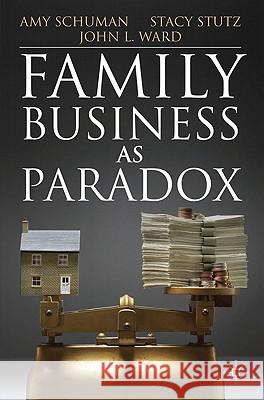
Rather than having to choose between the family and the business, the authors argue that if family-owned businesses can consciously manage and over time, perhaps, synthesize these contradictions, the Family Enterprise will have a long-term strategic and competitive advantage and the family will remain committed to continuity.
Rather than having to choose between the family and the business, the authors argue that if family-owned businesses can consciously manage and over ti...
Rather than having to choose between the family and the business, the authors argue that if family-owned businesses can consciously manage and over time, perhaps, synthesize these contradictions, the Family Enterprise will have a long-term strategic and competitive advantage and the family will remain committed to continuity.
Rather than having to choose between the family and the business, the authors argue that if family-owned businesses can consciously manage and over ti...
Family business planning has traditionally centered on two issues - estate planning and succession. The authors introduce the new concept of the Parallel Planning Process, explaining how to integrate the needs and expectations of the family and business systems in order to create an organic and entrepreneurial unit.
Family business planning has traditionally centered on two issues - estate planning and succession. The authors introduce the new concept of the Paral...