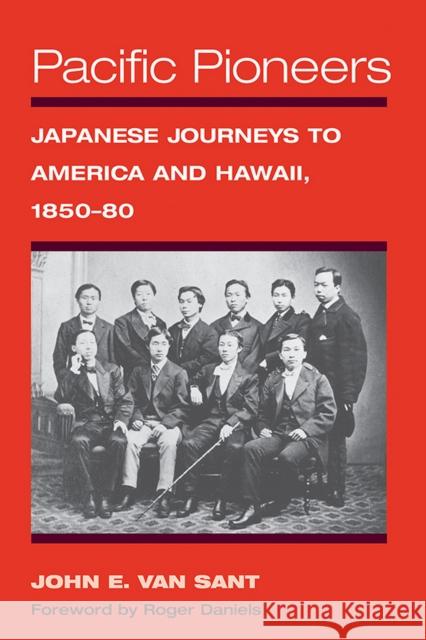
This volume profiles the first Japanese who resided in the United States or the Kingdom of Hawaii for a substantial period of time and the Westerners who influenced their experiences in the New World. It explores the motivations and accomplishments of these individuals.
This volume profiles the first Japanese who resided in the United States or the Kingdom of Hawaii for a substantial period of time and the Westerners ...
The most important bilateral relationship in Asia since the end of World War II is assuredly between the United States and Japan. Despite the geographical and cultural differences between these two nations, as well as the bitterness leftover from the war, an amicable and prosperous relationship has developed between the two countries boasting the world's largest economies. As the 21st century progresses, the continuing goodwill between the U.S. and Japan is of the utmost importance, as the peace and stability of the Asia-Pacific depends on their cooperation and efforts to contain...
The most important bilateral relationship in Asia since the end of World War II is assuredly between the United States and Japan. Despite the geograph...
In sharp contrast to the "melting pot" reputation of the United States, the American South--with its history of slavery, Jim Crow, and the civil rights movement--has been perceived in stark and simplistic demographic terms. In Far East, Down South, editors Raymond A. Mohl, John E. Van Sant, and Chizuru Saeki provide a collection of essential essays that restores and explores an overlooked part of the South's story--that of Asian immigration to the region. These essays form a comprehensive overview of key episodes and issues in the history of Asian immigrants to the South. During...
In sharp contrast to the "melting pot" reputation of the United States, the American South--with its history of slavery, Jim Crow, and the civil right...