Can we achieve justice during war? Should law substitute for "realpolitik""?" Can an international court act against the global community that created it? "Justice in a Time of War" is a translation from the French of the first complete, behind-the-scenes story of the International Criminal Tribunal for the Former Yugoslavia, from its proposal by Balkan journalist Mirko Klarin through recent developments in the first trial of its ultimate quarry, Slobodan Milosevi_. It is also a meditation on the conflicting intersection of law and politics in achieving justice and peace. "Le...
Can we achieve justice during war? Should law substitute for "realpolitik""?" Can an international court act against the global community that created...
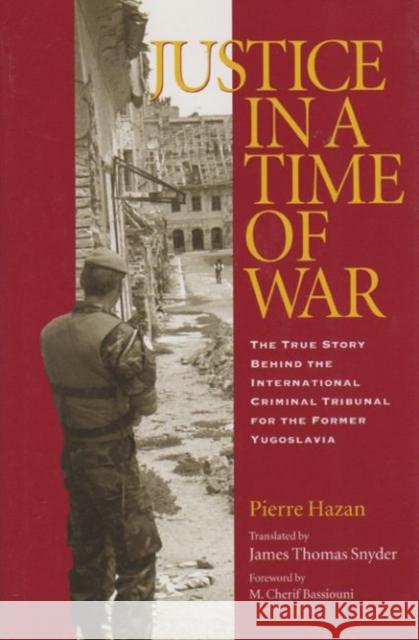
Can we achieve justice during war? Should law substitute for "realpolitik""?" Can an international court act against the global community that created it? "Justice in a Time of War" is a translation from the French of the first complete, behind-the-scenes story of the International Criminal Tribunal for the Former Yugoslavia, from its proposal by Balkan journalist Mirko Klarin through recent developments in the first trial of its ultimate quarry, Slobodan Milosevic. It is also a meditation on the conflicting intersection of law and politics in achieving justice and peace. "Le...
Can we achieve justice during war? Should law substitute for "realpolitik""?" Can an international court act against the global community that created...
In a country or community fractured by war and mass violence, who is to determine "justice" and how it should be achieved? Truth commissions, international courts, and financial restitution are some of the various solutions that have been used in recent years. However, these broad efforts at transitional justice may themselves backfire, and sometimes lead to further injustice. Given its own limitations and battered by political pressure from all sides, transitional justice is an imperfect solution. Yet as Pierre Hazan contends in his new book, it constitutes our best hope for liberation from...
In a country or community fractured by war and mass violence, who is to determine "justice" and how it should be achieved? Truth commissions, internat...
In a country or community fractured by war and mass violence, who is to determine "justice" and how it should be achieved? Truth commissions, international courts, and financial restitution are some of the various solutions that have been used in recent years. However, these broad efforts at transitional justice may themselves backfire, and sometimes lead to further injustice. Given its own limitations and battered by political pressure from all sides, transitional justice is an imperfect solution. Yet as Pierre Hazan contends in his new book, it constitutes our best hope for liberation from...
In a country or community fractured by war and mass violence, who is to determine "justice" and how it should be achieved? Truth commissions, internat...
Through war crimes prosecutions, truth commissions, purges of perpetrators, reparations, and memorials, transitional justice practices work under the assumptions that truth telling leads to reconciliation, prosecutions bring closure, and justice prevents the recurrence of violence. But when local responses to transitional justice destabilize these assumptions, the result can be a troubling disconnection between international norms and survivors' priorities. Localizing Transitional Justice traces how ordinary people respond to--and sometimes transform--transitional justice mechanisms,...
Through war crimes prosecutions, truth commissions, purges of perpetrators, reparations, and memorials, transitional justice practices work under the ...
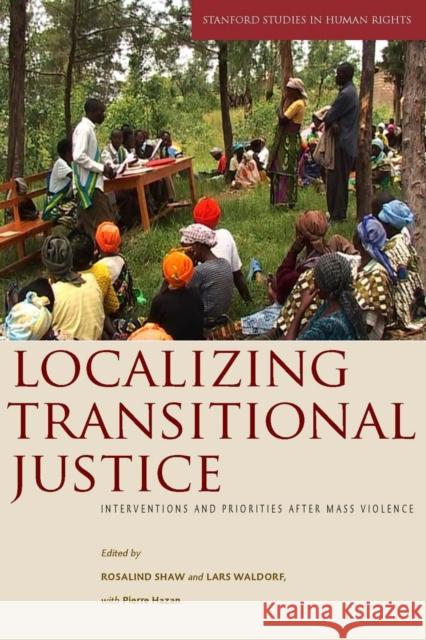
Through war crimes prosecutions, truth commissions, purges of perpetrators, reparations, and memorials, transitional justice practices work under the assumptions that truth telling leads to reconciliation, prosecutions bring closure, and justice prevents the recurrence of violence. But when local responses to transitional justice destabilize these assumptions, the result can be a troubling disconnection between international norms and survivors' priorities. Localizing Transitional Justice traces how ordinary people respond to--and sometimes transform--transitional justice mechanisms,...
Through war crimes prosecutions, truth commissions, purges of perpetrators, reparations, and memorials, transitional justice practices work under the ...