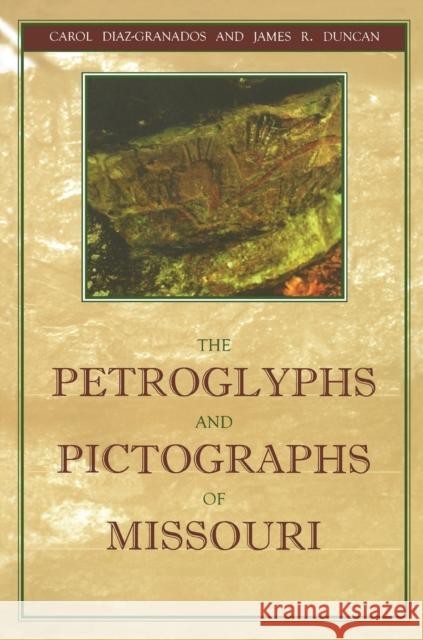
Images on rocks depicting birds, serpents, deer, and other designs are haunting reminders of prehistoric peoples. This book documents Missouri's rich array of petroglyphs and pictographs, analyzing the many aspects of these rock carvings and paintings to show how such representations of ritual activities can enhance our understanding of Native American culture.
Missouri is a particularly important site for rock art because it straddles the Plains, the Ozarks, and the Southeast. Carol Diaz-Granados and James Duncan have established a model for analyzing this rock art as archaeological...
Images on rocks depicting birds, serpents, deer, and other designs are haunting reminders of prehistoric peoples. This book documents Missouri's ri...
Showcases the wealth of new research on sacred imagery found in 12 states and 4 Canadian provinces.
In archaeology, rock-art--any long-lasting marking made on a natural surface--is similar to material culture (pottery and tools) because it provides a record of human activity and ideology at that site. Petroglyphs, pictographs, and dendroglyphs (tree carvings) have been discovered and recorded throughout the eastern woodlands of North America on boulders, bluffs, and trees, in caves and in rock shelters. These cultural remnants scattered on the landscape can tell us much...
Showcases the wealth of new research on sacred imagery found in 12 states and 4 Canadian provinces.
Showcases the wealth of new research on sacred imagery found in 12 states and 4 Canadian provinces.
In archaeology, rock-art--any long-lasting marking made on a natural surface--is similar to material culture (pottery and tools) because it provides a record of human activity and ideology at that site. Petroglyphs, pictographs, and dendroglyphs (tree carvings) have been discovered and recorded throughout the eastern woodlands of North America on boulders, bluffs, and trees, in caves and in rock shelters. These cultural remnants scattered on the landscape can tell us much...
Showcases the wealth of new research on sacred imagery found in 12 states and 4 Canadian provinces.
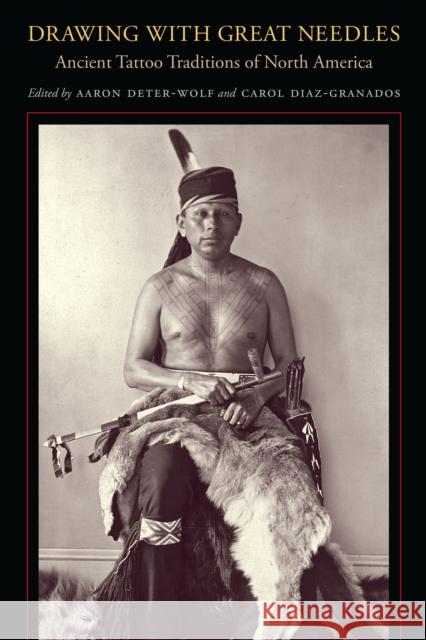
For thousands of years, Native Americans throughout the Eastern Woodlands and Great Plains used the physical act and visual language of tattooing to construct and reinforce the identity of individuals and their place within society and the cosmos. The act of tattooing served as a rite of passage and supplication, while the composition and use of ancestral tattoo bundles was intimately related to group identity. The resulting symbols and imagery inscribed on the body held important social, civil, military, and ritual connotations within Native American society. Yet despite the cultural...
For thousands of years, Native Americans throughout the Eastern Woodlands and Great Plains used the physical act and visual language of tattooing t...
Carol Diaz-Granados James R. Duncan F. Kent, III Reilly
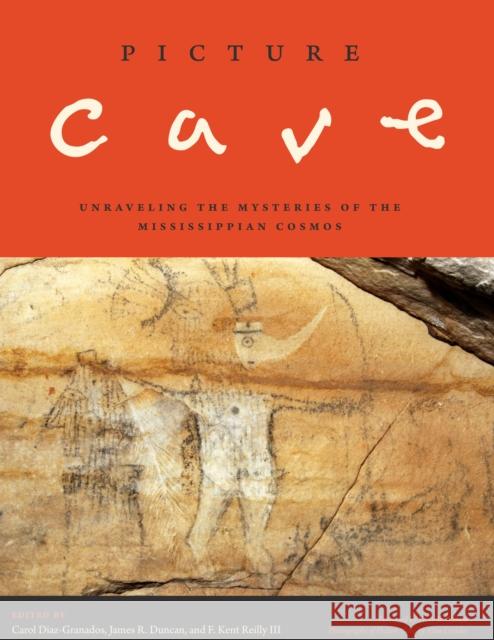
A millennia ago, Native Americans entered the dark recesses of a cave in eastern Missouri and painted an astonishing array of human, animal, and supernatural creatures on its walls. Known as Picture Cave, it was a hallowed site for sacred rituals and rites of passage, for explaining the multi-layered cosmos, for vision quests, for communing with spirits in the "other world," and for burying the dead. The number, variety, and complexity of images make Picture Cave one of the most significant prehistoric sites in North America, similar in importance to Cahokia and Chaco Canyon. Indeed,...
A millennia ago, Native Americans entered the dark recesses of a cave in eastern Missouri and painted an astonishing array of human, animal, and su...