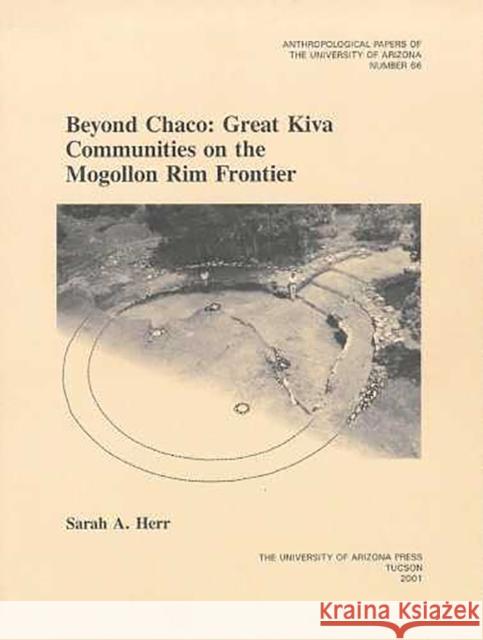
During the eleventh and twelfth centuries A.D., the Mogollon Rim region of east-central Arizona was a frontier, situated beyond and between larger regional organizations such as Chaco, Hohokam, and Mimbres. On this southwestern edge of the Puebloan world, past settlement poses a contradiction to those who study it. Population density was low and land abundant, yet the region was overbuilt with great kivas, a form of community-level architecture. Using a frontier model to evaluate household, community, and regional data, Sarah Herr demonstrates that the archaeological patterns of the...
During the eleventh and twelfth centuries A.D., the Mogollon Rim region of east-central Arizona was a frontier, situated beyond and between la...
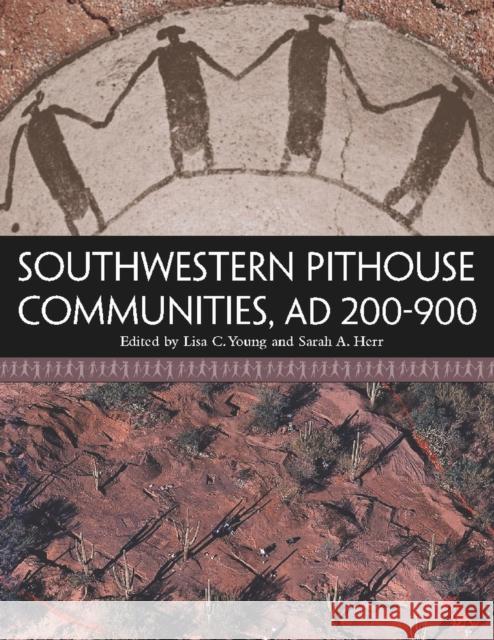
Pithouses are the earliest identifiable domestic architecture in many areas of the world, and can provide insights into the origins of communities--a fundamental component of past and present societies. In this book, Lisa Young and Sarah Herr invite archaeologists to explore the development of communities using information from pithouse sites in the American Southwest.
Using regional and topical syntheses to investigate the formation of pithouse communities, contributors to this volume examine the complex relationship between the economic transition to agricultural dependence and the...
Pithouses are the earliest identifiable domestic architecture in many areas of the world, and can provide insights into the origins of communities-...