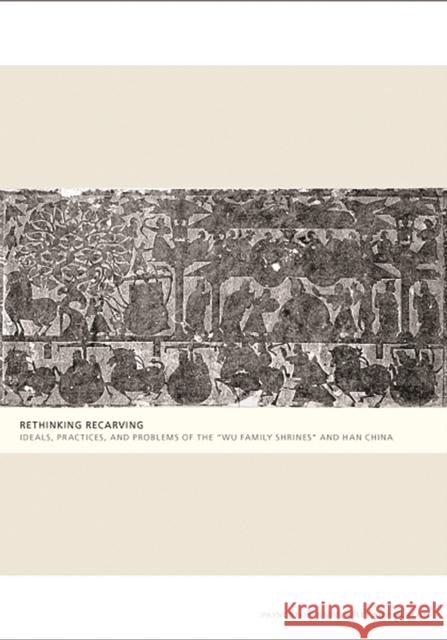
The "Wu Family Shrines," one of the most important cultural monuments of early China, comprise approximately fifty stone slabs from the so-called Wu cemetery in Shandong province. Depicting emperors and kings, heroic women, filial sons, and mythological subjects, these famous carved and engraved reliefs may have been intended to reflect such basic themes as loyalty to the emperor, filial piety, and wifely devotion; centuries later, they vividly bring to life the art, social conditions, and Confucian ideology of the Eastern Han.This generously illustrated book examines the stone slabs and...
The "Wu Family Shrines," one of the most important cultural monuments of early China, comprise approximately fifty stone slabs from the so-called Wu c...
The "Wu Family Shrines" pictorial carvings from Han dynasty China (206 BCE-220 CE) are among the earliest works of Chinese art examined in an international arena. Since the eleventh century, the carvings have been identified by scholars as one of the most valuable and authentic materials for the study of antiquity. This important book presents essays by archaeologists, art and architectural historians, curators, and historians that reexamine the carvings, adding to our understanding of the long cultural history behind them and to our knowledge of Han practices. The authors offer a...
The "Wu Family Shrines" pictorial carvings from Han dynasty China (206 BCE-220 CE) are among the earliest works of Chinese art examined in an internat...