A member of the so-called -Pictures Generation, - Troy Brauntuch (born 1954) makes appropriated works that, by removing or adding context, can, on one hand, empty out culturally charged icons, and on the other hand, supply seemingly innocuous material with massive charge. Brauntuch's work 1 2 3 provides a useful example of the tactics he likes to employ; it consists of screenprints of a set of fairly unremarkable sketches--a tank, a vestibule, a stage set--which turn out to have been drawn by one Adolf Hitler. This semiotic standoff between innocuous artwork and not-so-innocuous author...
A member of the so-called -Pictures Generation, - Troy Brauntuch (born 1954) makes appropriated works that, by removing or adding context, can, on one...
Valentin Carron's sculptures mark a three-dimensional renewal of appropriationism, through the re-employment of vernacular forms that are neither authentic nor kitsch. His objects play with the ambiguities of fake wood, concrete and bronze, and with the iconography of power and authority in public sculptures or commemorative monuments. This volume offers an overview.
Valentin Carron's sculptures mark a three-dimensional renewal of appropriationism, through the re-employment of vernacular forms that are neither auth...
Australian artist David Noonan (born 1969) uses found imagery as the basis for his screenprinted canvases and sculptures. Enigmatic figures, printed in grainy black and white or sepia, pose in these elaborate artworks, invoking covert and futuristic rituals. This monograph will be the first comprehensive overview of Noonan's work.
Australian artist David Noonan (born 1969) uses found imagery as the basis for his screenprinted canvases and sculptures. Enigmatic figures, printed i...
Paulina Olowska's paintings, collages, and knitted works explore Communist Poland's fascination with Western consumerism and celebrates the spirit of what Polish writer Leopold Tyrmand called the -Applied Fantastic, - or the vernacular recreations of Western styles--while also paying tribute to American Pattern and Decoration art of the 1970s. This first overview includes an interview with Adam Szymczyk and an essay by Jan Verwoert.
Paulina Olowska's paintings, collages, and knitted works explore Communist Poland's fascination with Western consumerism and celebrates the spirit of ...
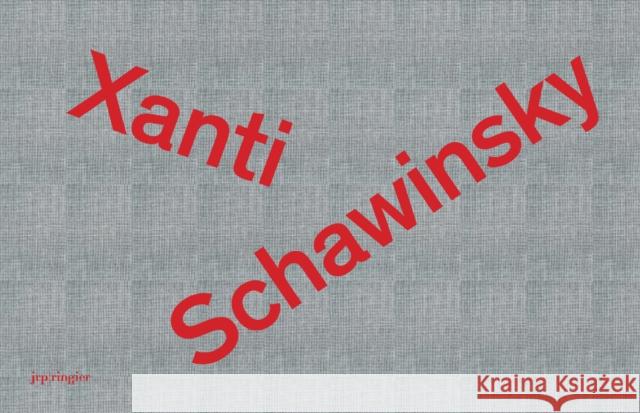
In his own lifetime, Swiss artist Xanti Schawinsky was best known for the theatrical work he developed at the Bauhaus. During his Bauhaus years Schawinsky made albums of collaged photographs and papers, personal as well as artistic. Xanti Schawinsky: The Album is based on the albums Schawinsky conceived during his tenure in the Bauhaus theater department, working documents which provide clues to his later work at Black Mountain College and beyond. This volume presents a wealth of previously unpublished photographs and documents from this formative stage in Schawinsky's development,...
In his own lifetime, Swiss artist Xanti Schawinsky was best known for the theatrical work he developed at the Bauhaus. During his Bauhaus years Schawi...