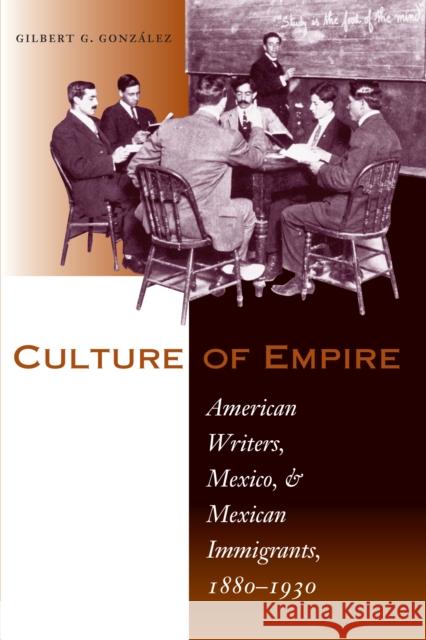
A history of the Chicano community cannot be complete without taking into account the United States' domination of the Mexican economy beginning in the late nineteenth and early twentieth centuries, writes Gilbert G. Gonzalez. For that economic conquest inspired U.S. writers to create a "culture of empire" that legitimated American dominance by portraying Mexicans and Mexican immigrants as childlike "peons" in need of foreign tutelage, incapable of modernizing without Americanizing, that is, submitting to the control of U.S. capital. So powerful was and is the culture of empire that its...
A history of the Chicano community cannot be complete without taking into account the United States' domination of the Mexican economy beginning in...
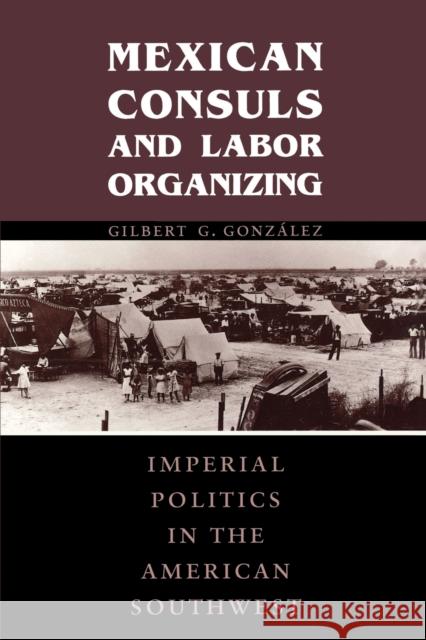
Chicano history, from the early decades of the twentieth century up to the present, cannot be explained without reference to the determined interventions of the Mexican government, asserts Gilbert G. Gonzalez. In this pathfinding study, he offers convincing evidence that Mexico aimed at nothing less than developing a loyal and politically dependent emigrant community among Mexican Americans, which would serve and replicate Mexico's political and economic subordination to the United States.
Gonzalez centers his study around four major agricultural workers' strikes in Depression-era...
Chicano history, from the early decades of the twentieth century up to the present, cannot be explained without reference to the determined interve...
This study argues for a radically new interpretation of the origins and evolution of the ethnic Mexican community across the US. This book offers a definitive account of the interdependent histories of the US and Mexico as well as the making of the Chicano population in America. The authors link history to contemporary issues, emphasizing the overlooked significance of late 19th and 20th century US economic expansionism to Europe in the formation of the Mexican community.
This study argues for a radically new interpretation of the origins and evolution of the ethnic Mexican community across the US. This book offers a...
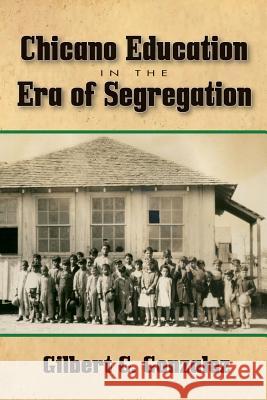
Chicano Education in the Era of Segregation analyzes the socioeconomic origins of the theory and practice of segregated schooling for Mexican-Americans from 1910 to 1950. Gilbert G. Gonzalez links the various aspects of the segregated school experience, discussing Americanization, testing, tracking, industrial education, and migrant education as parts of a single system designed for the processing of the Mexican child as a source of cheap labor. The movement for integration began slowly, reaching a peak in the 1940s and 1950s. The 1947 Mendez v. Westminster case was the first federal court...
Chicano Education in the Era of Segregation analyzes the socioeconomic origins of the theory and practice of segregated schooling for Mexican-American...