Iurii Trifonov (1925-81) has recently become well-known in the West as a writer of Soviet urban life. This study concentrates on his exploration of major events in Russian history and their implications and consequences for his time. David Gillespie traces this interest through all of Trifonov's writings, from his earliest, Stalin prize-winning period to the self-consciously modernist later works. Through historical analogies and allusions, Trifonov developed a language with which to combat the repressive censorship of his time. He upheld the concepts of truth and justice when glasnost was...
Iurii Trifonov (1925-81) has recently become well-known in the West as a writer of Soviet urban life. This study concentrates on his exploration of ma...
Fedor Aleksandrovich Abramov (1920-83) was one of the leading representatives of the Russian village prose movement of the 1960s and 1970s. In "The Life and Work of Fedor Abramov, " scholars from the United States and abroad draw on Abramov's works, his diaries, and his private writings as sources for examining his place within the village prose movement and within Anglo-American theories of cultural reception.
Fedor Aleksandrovich Abramov (1920-83) was one of the leading representatives of the Russian village prose movement of the 1960s and 1970s. In "The Li...
Iurii Trifonov (1925-81) has recently become well-known in the West as a writer of Soviet urban life. This study concentrates on his exploration of major events in Russian history and their implications and consequences for his time. David Gillespie traces this interest through all of Trifonov's writings, from his earliest, Stalin prize-winning period to the self-consciously modernist later works. Through historical analogies and allusions, Trifonov developed a language with which to combat the repressive censorship of his time. He upheld the concepts of truth and justice when glasnost was...
Iurii Trifonov (1925-81) has recently become well-known in the West as a writer of Soviet urban life. This study concentrates on his exploration of ma...
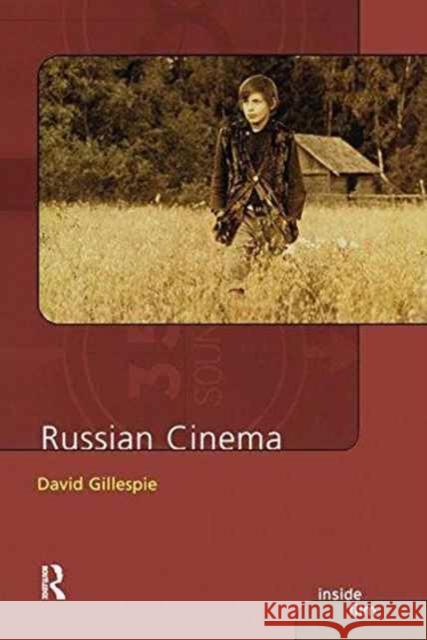
Russian Cinema provides a lively and informative exploration of the film genres that developed during Russia's tumultuous history, with discussion of the work of Eisenstein, Pudovkin, Mikhalkov, Paradzhanov, Sokurov and others.
The background section assesses the contribution of visual art and music, especially the work of the composers Shostakovich and Prokofev, to Russian cinema. Subsequent chapters explore a variety of topics:
The literary space - the cinematic rendering of the literary text, from 'Sovietized' versions to bolder and more innovative...
Russian Cinema provides a lively and informative exploration of the film genres that developed during Russia's tumultuous history, with di...