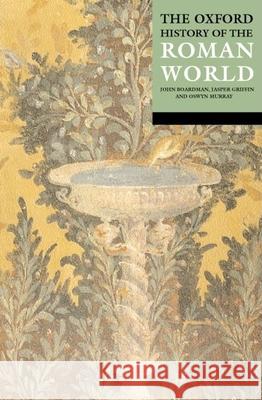
In less than fifty-three years, Rome subjected most of the known world to its rule. This authoritative and compelling work tells the story of the rise of Rome from its origins as a cluster of villages to the foundation of the Roman Empire by Augustus, to its consolidation in the first two centuries CE. It also discusses aspects of the later Empire and its influence on Western civilization, not least of which was the adoption of Christianity. Packed with fascinating detail and written by acknowledged experts in Roman history, the book expertly interweaves chapters on social and political...
In less than fifty-three years, Rome subjected most of the known world to its rule. This authoritative and compelling work tells the story of the rise...
For most people there is no more satisfying expression of Greek art than its sculpture. It was the first, the only ancient art to break free from conceptual conventions for representing men and animals, and to explore consciously how art might imitate or even improve upon it. The first stages of this discovery, from the semi-abstract beginnings in the eighth century BC to the more representational art of the early fifth century, are explored and illustrated in this handbook.
For most people there is no more satisfying expression of Greek art than its sculpture. It was the first, the only ancient art to break free from conc...
Volume III of The Cambridge Ancient History was first published in 1925 in one volume. The new edition has expanded to such an extent, owing to the immense amount of new information now available, that it has had to be divided into three parts. Volume III Part 1 opens with a survey of the Balkans north of Greece in the Prehistoric period. This is the first time such a survey has been published of this area which besides its intrinsic interest is important for its influence on the cultures of the Aegean and Anatolia. The rest of the book is devoted to the tenth to the eighth centuries B. C. In...
Volume III of The Cambridge Ancient History was first published in 1925 in one volume. The new edition has expanded to such an extent, owing to the im...
During this period the dominant powers in the East were Assyria and then Babylonia. Each established an extensive empire that was based on Mesopotamia, and each in turn fell largely through internal strife.
During this period the dominant powers in the East were Assyria and then Babylonia. Each established an extensive empire that was based on Mesopotamia...
Volume V of the new edition of The Cambridge Ancient History encompasses the first Classic age of European civilization--the fifth century BC. This was the first and last period before the Romans in which great political and military power was located in the same place as cultural importance. This volume, therefore, is more narrowly focused geographically than its predecessors and successors, and hardly strays beyond Greece. Athens is at the center of the picture, both politically and culturally, but events and achievements elsewhere are assessed as carefully as the nature of our sources...
Volume V of the new edition of The Cambridge Ancient History encompasses the first Classic age of European civilization--the fifth century BC. This wa...
The emergence of the Greek world from the Dark Ages to the height of its Geometric civilization was described in The Cambridge Ancient History Volume III Part I. Volume III Part III explores the new prosperity and growth of the young city-states in the eighth to the sixth centuries B.C. This was the great period of expansion and colonization which saw the establishment of Greek city-states from the Western Mediterranean to the Black Sea. This volume describes the East and Egypt, the importance of West Greece and the Aegean islands in trading and exploration, the special characteristics of the...
The emergence of the Greek world from the Dark Ages to the height of its Geometric civilization was described in The Cambridge Ancient History Volume ...