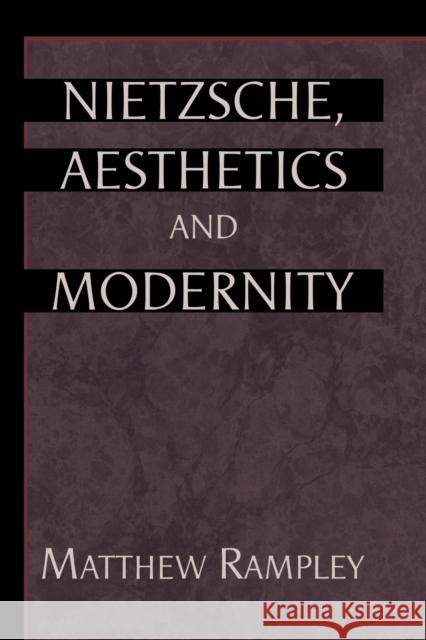
Nietzsche, Aesthetics and Modernity analyzes Nietzsche's response to the aesthetic tradition, tracing in particular the complex relationship between the work and thought of Nietzsche, Kant, and Hegel. Focusing in particular on the critical role of negation and sublimity in Nietzsche's account of art, it explores his confrontation with modernity and his attempt to posit a revitalized artistic practice as the countermovement to modern nihilism. It also highlights the extent to which Nietzsche counters the culture of his own time with a dialectical notion of aesthetic interpretation and...
Nietzsche, Aesthetics and Modernity analyzes Nietzsche's response to the aesthetic tradition, tracing in particular the complex relationship between t...
Edgar Wind was one of the most distinguished art historians and philosophers of the twentieth century. He made crucial contributions to debates on aesthetics and on the interdisciplinary nature of cultural history involving such other leading figures as Ernst Cassirer and Erwin Panofsky. It is not always realised, however, that his early thinking was moulded by a concern with the German philosophical tradition, culminating in the analysis of the meaning and function of scientific experimentation and proof. This first edition in English of Edgar Wind's important work Das Experiment und die...
Edgar Wind was one of the most distinguished art historians and philosophers of the twentieth century. He made crucial contributions to debates on aes...
Matthew Rampley's The Vienna School of Art History is the first book in over seventy-five years to study in depth and in context the practices of art history from 1847, the year the first teaching position in the discipline was created, to 1918, the collapse of Austria-Hungary. It traces the emergence of art history as a discipline, the establishment of norms of scholarly inquiry, and the involvement of art historians in wider debates about the cultural and political identity of the monarchy.
The so-called Vienna School plays the central role in the study, but Rampley also...
Matthew Rampley's The Vienna School of Art History is the first book in over seventy-five years to study in depth and in context the pract...
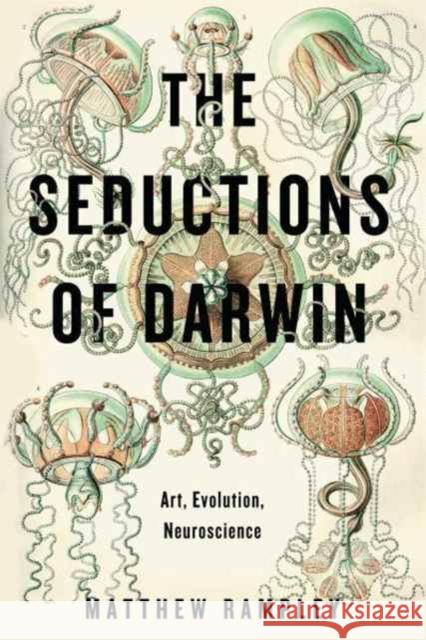
The surge of evolutionary and neurological analyses of art and its effects raises questions of how art, culture, and the biological sciences influence one another, and what we gain in applying scientific methods to the interpretation of artwork. In this insightful book, Matthew Rampley addresses these questions by exploring key areas where Darwinism, neuroscience, and art history intersect.
Taking a scientific approach to understanding art has led to novel and provocative ideas about its origins, the basis of aesthetic experience, and the nature of research into art and the...
The surge of evolutionary and neurological analyses of art and its effects raises questions of how art, culture, and the biological sciences influe...