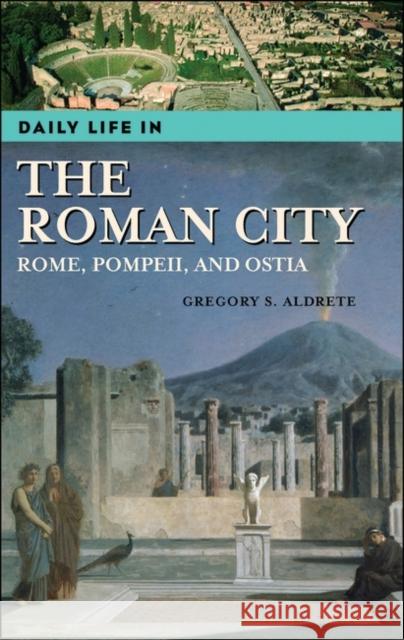
Despite the fact that the majority of the inhabitants of the Roman Empire lived an agricultural existence and thus resided outside of urban centers, there is no denying the fact that the core of Roman civilization--its essential culture and politics--was based in cities. Even at the furthest boundaries of the Empire, Roman cities shared a remarkable and consistent similarity in terms of architecture, art, infrastructure, and organization which was modeled after the greatest city of all, Rome itself. In Gregory Aldrete's exhaustive account, readers will have the opportunity to peer into the...
Despite the fact that the majority of the inhabitants of the Roman Empire lived an agricultural existence and thus resided outside of urban centers...
Life in Rome was relentlessly public, and oratory was at its heart. Orations were dramatic spectacles in which the speaker deployed an arsenal of rhetorical tricks and strategies aimed at arousing the emotions of the audience, and spectators responded vigorously and vocally with massed chants of praise or condemnation. Unfortunately, many aspects of these performances have been lost. In the first in-depth study of oratorical gestures and crowd acclamations as methods of communication at public spectacles, Gregory Aldrete sets out to recreate these vital missing components and to recapture...
Life in Rome was relentlessly public, and oratory was at its heart. Orations were dramatic spectacles in which the speaker deployed an arsenal of r...
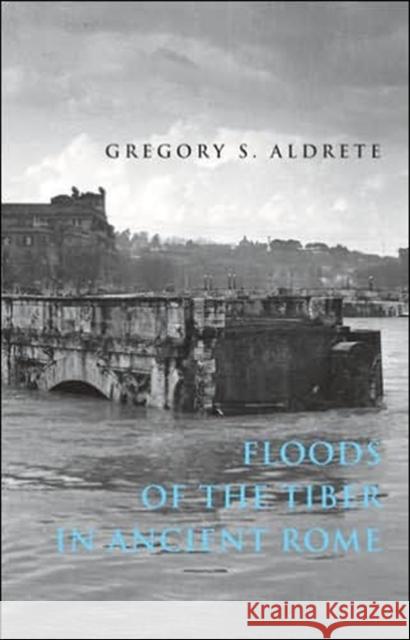
While the remains of its massive aqueducts serve as tangible reminders of Rome's efforts to control its supply of drinking water, there are scant physical reminders that other waters sometimes raged out of control. In fact, floods were simply a part of life in ancient Rome, where proximity to the Tiber left a substantial part of the city vulnerable to the river's occasional transgressions.
Here, in the first book-length treatment of the impact of floods on an ancient city, Gregory S. Aldrete draws upon a diverse range of scientific and cultural data to develop a rich and detailed...
While the remains of its massive aqueducts serve as tangible reminders of Rome's efforts to control its supply of drinking water, there are scant p...
Although most Romans lived outside urban centers, the core of Roman civilization lay in its cities. Throughout the empire these cities modeled as they were after Rome were strikingly alike. In Gregory Aldrete s exhaustive account, readers can peer into the inner workings of daily life in ancient Rome and examine the history, infrastructure, government, and economy of Rome; its emperors; and its inhabitants their life and death, dangers and pleasures, entertainment, and religion.
Aldrete also shows how Roman cities differed. To accomplish this comparison, in addition to Rome, he explores...
Although most Romans lived outside urban centers, the core of Roman civilization lay in its cities. Throughout the empire these cities modeled as they...
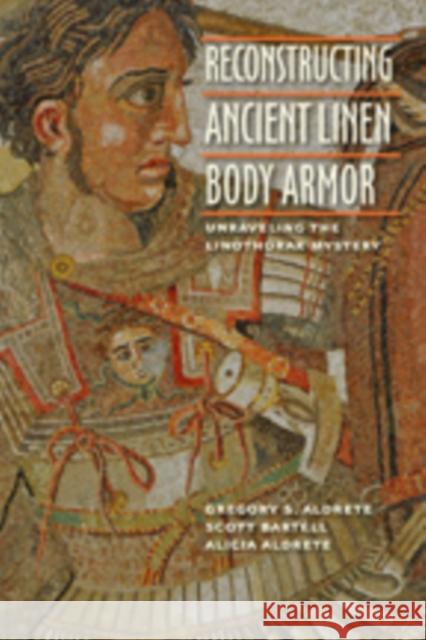
Alexander the Great led one of the most successful armies in history and conquered nearly the entirety of the known world while wearing armor made of cloth. How is that possible? In Reconstructing Ancient Linen Body Armor, Gregory S. Aldrete, Scott Bartell, and Alicia Aldrete provide the answer.
An extensive multiyear project in experimental archaeology, this pioneering study presents a thorough investigation of the linothorax, linen armor worn by the Greeks, Macedonians, and other ancient Mediterranean warriors. Because the linothorax was made of cloth, no examples of it have...
Alexander the Great led one of the most successful armies in history and conquered nearly the entirety of the known world while wearing armor made ...