Historians of the African American experience after Reconstruction have tended to imply that the black elite served only their own interests, that their exclusive control of black institutions precluded efforts to improve the status of African Americans in general. In Leading the Race, Jacqueline M. Moore reevaluates the role of this black elite by examining how their self-interest interacted with the needs of the black community in Washington, D.C., the center of black society at the turn of the century.
Immediately following Reconstruction, black elites did concern themselves with...
Historians of the African American experience after Reconstruction have tended to imply that the black elite served only their own interests, that ...
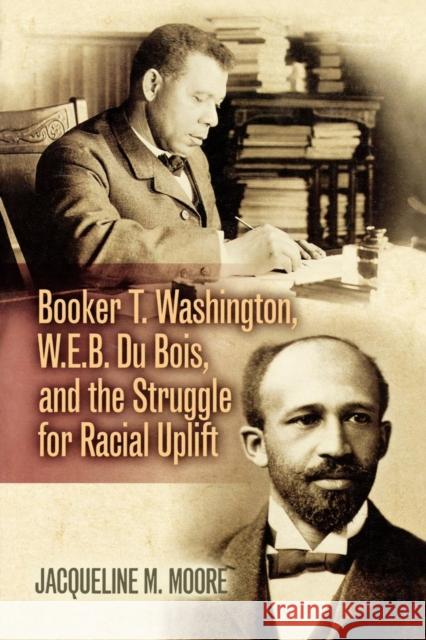
The beginning of the twentieth century was a critical time in African-American history. Segregation and discrimination were on the rise. Two seminal African American figures began to debate on ways to combat racial problems. Booker T. Washington and W.E.B. Du Bois developed different strategies for racial uplift as they actively competed for the support of the black community. In the process, Washington and Du Bois made a permanent mark on the debate over how blacks should achieve equality in America. Although other books address the Washington-Du Bois conflict, this text provides a detailed...
The beginning of the twentieth century was a critical time in African-American history. Segregation and discrimination were on the rise. Two seminal A...