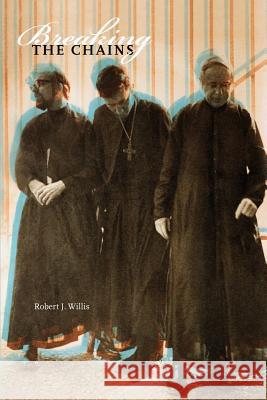
Raised in a Catholic family in the Pacific Northwest, author Robert Willis learned to obey two judges: his father, a county superior court judge, and God. He joined the Jesuits, hoping to please both.
The 1960s revolution tested his unthinking obedience to authorities-paternal, religious, and political-as the immorality of the Vietnam War troubled his conscience and the Second Vatican Council challenged his position in the modern world. When his efforts to stop the war led him to Vietnam, he knew he had to break the chains that bound him to the past.
Willis's path took him to the...
Raised in a Catholic family in the Pacific Northwest, author Robert Willis learned to obey two judges: his father, a county superior court judge, and ...
Crisis grips the American Catholic community. Church professionals abandon it in record numbers while many who remain grapple with low morale, overwork, and compensatory addictions. Schools either close or laypeople staff them. Parishes consolidate, bereft of pastors and communicants. The people itself lies fragmented, a landscape of polarized groups, a kaleidoscope of political partisans more than gatherings of the faithful. Its future hangs in the balance. Current leaders fixate on two plans. In one they march steadfastly into the past, pursuing the illusion of a remnant group of the...
Crisis grips the American Catholic community. Church professionals abandon it in record numbers while many who remain grapple with low morale, overwor...
Psychotherapy, in order to survive, must shift from curing to caring. The pathological model is giving way to the growth model. Finding wholeness in our confusion requires imagination and transcendence. Healing requires more than self-knowledge and awareness. Only through experiencing oneself, in a struggle of mutual acceptance, are the blocks to the life force removed. The book is about being fully alive. It leads to the thinking of the most profound psychotherapy into the next century. Existentialism is the framework by which the author addresses our deepest life needs. It alone gives...
Psychotherapy, in order to survive, must shift from curing to caring. The pathological model is giving way to the growth model. Finding wholeness i...
Psychotherapy, in order to survive, must shift from curing to caring. The pathological model is giving way to the growth model. Finding wholeness in our confusion requires imagination and transcendence. Healing requires more than self-knowledge and awareness. Only through experiencing oneself, in a struggle of mutual acceptance, are the blocks to the life force removed. The book is about being fully alive. It leads to the thinking of the most profound psychotherapy into the next century. Existentialism is the framework by which the author addresses our deepest life needs. It alone gives...
Psychotherapy, in order to survive, must shift from curing to caring. The pathological model is giving way to the growth model. Finding wholeness i...