The Cosmopolitan Screen investigates the extent to which German filmmakers throughout the last sixty years have engaged with the ever more fluid trade of images, meanings, and identities in a globalizing world. The volume traces German cinema's negotiation of the global as a multilayered story in which the hopes and the fears about the prospect of a more cosmopolitan culture often go hand in hand. Featuring original work from some of the foremost scholars in German film studies from either side of the Atlantic, The Cosmopolitan Screen makes a persuasive case for rethinking the...
The Cosmopolitan Screen investigates the extent to which German filmmakers throughout the last sixty years have engaged with the ever more flui...
Walter Benjamin and the Aesthetics of Power explores Walter Benjamin's seminal writings on the relationship between mass culture and fascism. The book offers a nuanced reading of Benjamin's widely influential critique of aesthetic politics, while it contributes to current debates about the cultural projects of Nazi Germany, the changing role of popular culture in the twentieth century, and the way in which Nazi aesthetics have persisted into the present. Lutz Koepnick first explores the development of the aestheticization thesis in Benjamin's work from the early 1920s to his death in 1940....
Walter Benjamin and the Aesthetics of Power explores Walter Benjamin's seminal writings on the relationship between mass culture and fascism. The book...
This book explores German and European exile visual artists, designers and film practitioners in the United States such as Max Beckmann, George Grosz, Hans Richter, Peter Lorre, and Edgar Ulmer and examines how American artists including Walter Quirt, Jackson Pollock, and Robert Motherwell responded to the Europeanization of American culture.
This book explores German and European exile visual artists, designers and film practitioners in the United States such as Max Beckmann, George Grosz,...
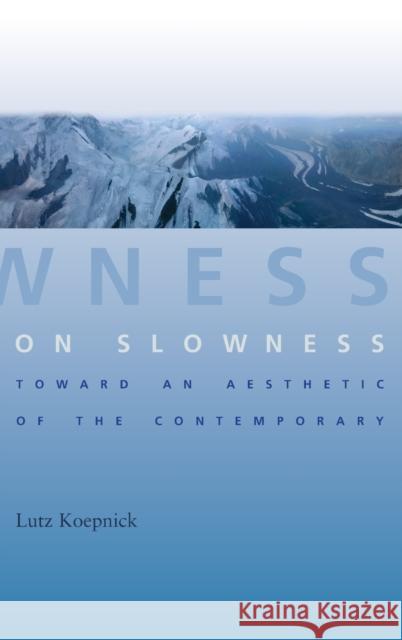
Speed is an obvious facet of contemporary society, whereas slowness has often been dismissed as conservative and antimodern. Challenging a long tradition of thought, Lutz Koepnick instead proposes we understand slowness as a strategy of the contemporary--a decidedly modern practice that gazes firmly at and into the present's velocity. As he engages with late twentieth- and early twenty-first-century art, photography, video, film, and literature, Koepnick explores slowness as a critical medium to intensify our temporal and spatial experiences. Slowness helps us register the multiple layers...
Speed is an obvious facet of contemporary society, whereas slowness has often been dismissed as conservative and antimodern. Challenging a long tradit...
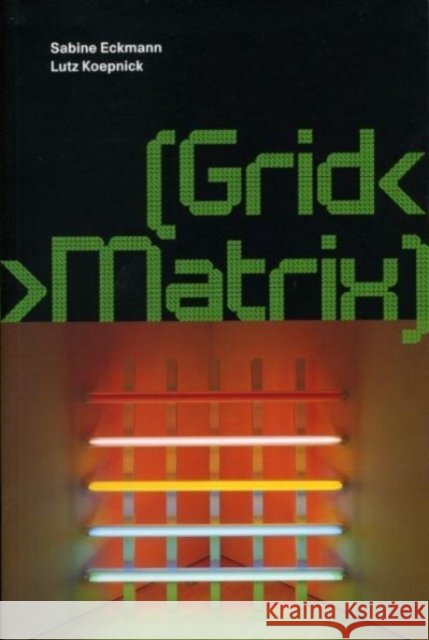
" Grid Matrix]" is the first publication in the Screen Arts and New Media Aesthetics series, a series of exhibitions and publications that explore the interpenetration of different screens of representation in contemporary culture from the canvas to the computer terminal, the cinema to the television set, the video monitor to the museum wall, the book page to the cell phone display. This series probes the aesthetic uses and historical dimensions of contemporary screen culture and sheds light on how different artists make use of newer media and technologies, how the rise of the digital impacts...
" Grid Matrix]" is the first publication in the Screen Arts and New Media Aesthetics series, a series of exhibitions and publications that explore the...