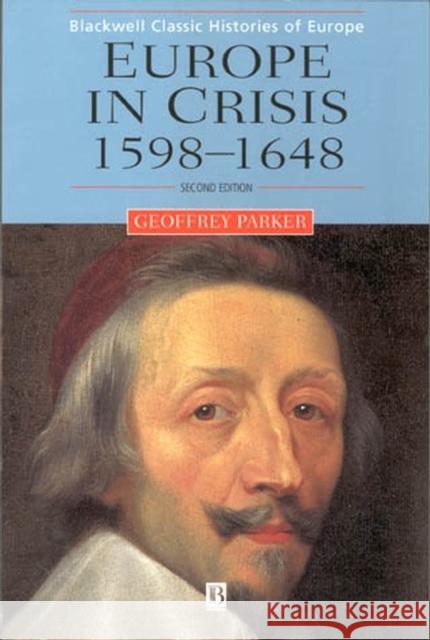
The Thirty Years' War (1618-48) is a central episode in early modern history. This revised edition of Geoffrey Parker's text incorporates recent research whilst retaining the range and depth of coverage of the first edition. It continues to provide a narrative and analytical account of the war.
The Thirty Years' War (1618-48) is a central episode in early modern history. This revised edition of Geoffrey Parker's text incorporates recent resea...
What if the Persians had won at Salamis? What if Christ had not been crucified? What if the Chinese had harnessed steam power before the West? Disparaged by some as a mere parlor game, counterfactual history is seen by others as an indispensable historical tool. Taking as their point of inquiry the debate over the inevitability of the rise of the West, the eminent scholars in Unmaking the West argue that there is no escaping counterfactual history. Whenever we make claims of cause and effect, we commit ourselves to the assumption that if key links in the causal chain were broken,...
What if the Persians had won at Salamis? What if Christ had not been crucified? What if the Chinese had harnessed steam power before the West? Dispara...
The idea of a dialogue--sometimes harmonious, sometimes divisive--between the center and periphery of the early modern European state stands at the heart of much of John Elliott's historical writing. This collection of essays by a group of Elliott's former students examines different aspects of this important theme and develops them. Taken together with the "personal appreciation" of Elliott (now Regius Professor of Modern History at Oxford), it forms an important examination of the work of the greatest living historian of Spain as well as being a major contribution to early modern European...
The idea of a dialogue--sometimes harmonious, sometimes divisive--between the center and periphery of the early modern European state stands at the he...
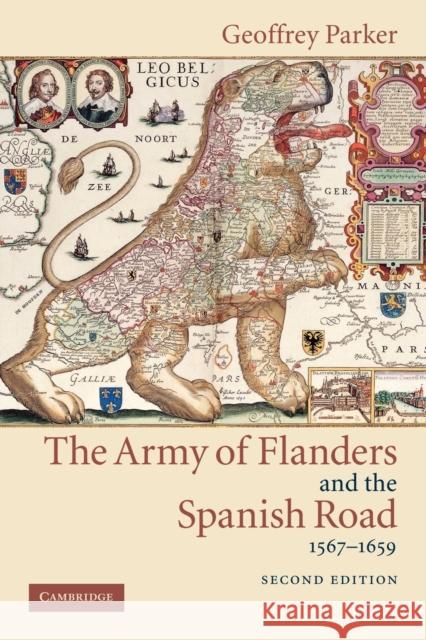
The publication of The Army of Flanders and the Spanish Road in 1972 marked the birth of the "new military history," which emphasized military organization--mobilization, pay, supply, morale and, above all, logistics--rather than military "events" such as sieges and battles. Constantly cited since its first publication in English (with translations into Spanish and Dutch), this revised updated second edition includes new sources and references but otherwise remains faithful to the original edition. First Edition Hb (1972): 0-521-08462-8 First Edition Pb (1975): 0-521-09907-2
The publication of The Army of Flanders and the Spanish Road in 1972 marked the birth of the "new military history," which emphasized military organiz...
In the new edition of this classic book, Geoffrey Parker draws on material from all over Europe to provide an authoritative and exciting account of the eventful first half of the seventeenth century.
In the new edition of this classic book, Geoffrey Parker draws on material from all over Europe to provide an authoritative and exciting account of th...
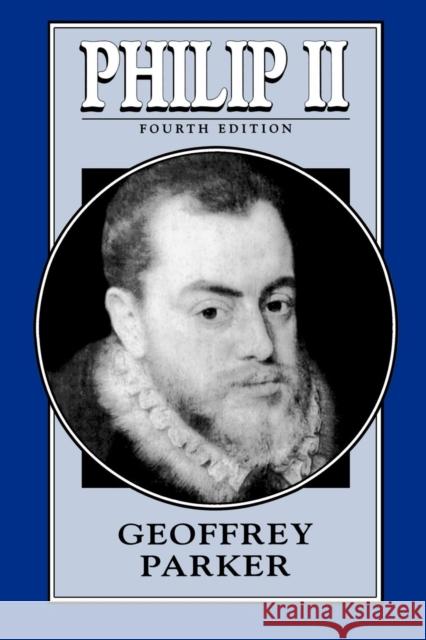
In this spellbinding biography, the definitive work on Philip, Geoffrey Parker drew upon a vast, previously untapped collection of the king's private correspondence, in which he expressed his emotions, personal thoughts, and social philosophy. This new edition has a Bibliographical Essay, evaluating the many new works on Philip published on and around the 400th anniversary of his death.
In this spellbinding biography, the definitive work on Philip, Geoffrey Parker drew upon a vast, previously untapped collection of the king's private ...
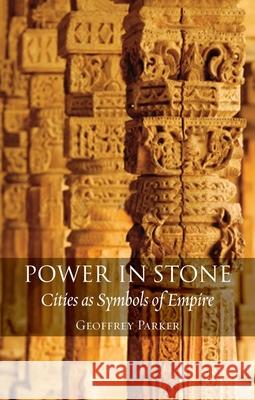
From ancient Persia to the Third Reich, imperial powers have built cities in their image, seeking to reflect their power and influence through a show of magnificence and a reflection of their values. Statues, pictures, temples, palacesall combine to produce the necessary justification for the wielding of power while intimidating opponents. InPower in Stone, Geoffrey Parker traces the very nature of power through history by exploring the structural symbolism of these cities. Traveling from Persepolis to Constantinople, Saint Petersburg to Beijing and Delhi, Parker considers how...
From ancient Persia to the Third Reich, imperial powers have built cities in their image, seeking to reflect their power and influence through a show ...
This book surveys the development of geo-political thought in the twentieth century and relates it to international political developments, as well as examining how sound geopolitical theories are. It considers the work of Mackinder, Hartshorne, and Haushofer and his disciples in Germany who influenced the Nazis; and of more recent developments including Marxist geographical writing.
This book surveys the development of geo-political thought in the twentieth century and relates it to international political developments, as well...
Using the examples of the Ottoman Empire, Spain, Austria, France and Germany, this book describes the principal geopolitical features of the expansionist state. It then presents a model of the operation of the expansionist process over space and time. It goes on to apply the geopolitical characteristics of the model to the period after 1945 in order to assess the extent to which the Soviet Union might be considered as being an expansionist state, either actually or potentially. This latter question is obviously once more extremely relevant with the current events in Ukraine.
Using the examples of the Ottoman Empire, Spain, Austria, France and Germany, this book describes the principal geopolitical features of the expans...