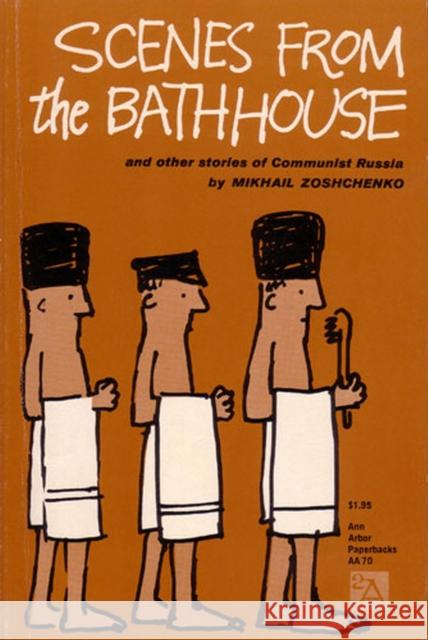
Sixty-five luminous satirical tales, from a writer who recorded, with unfailing style and wit, an era's troubles and a people's voice. (Los Angeles Times) In his prime, satirist Mikhail Zoshchenko was more widely read in the Soviet Union than either Pasternak or Solzhenitsyn. His stories give expression to the experience of the ordinary Soviet citizen struggling to survive in the 1920s and '30s, beset by an acute housing shortage, ubiquitous theft and corruption, and the impenetrable new language of the Soviet state. Written in the semi-educated talk of the man or woman on the street,...
Sixty-five luminous satirical tales, from a writer who recorded, with unfailing style and wit, an era's troubles and a people's voice. (Los Angeles Ti...
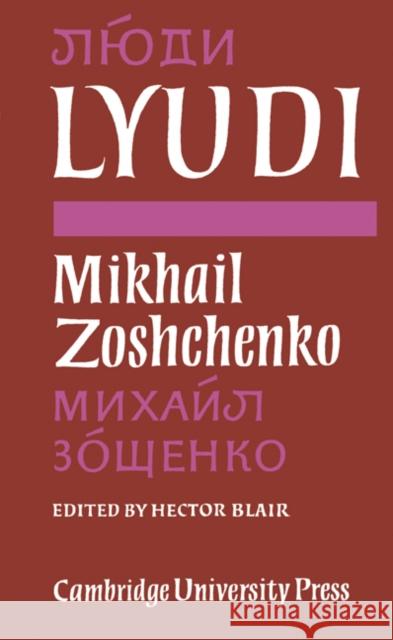
Mikhail Zoshchenko, 1895 1958, was a great Soviet humorist. His works give a unique picture of Russian life in the Soviet period - a picture which, though satirically distorted and camouflaged by deliberate ambiguities, presents a shrewd commentary on the times. Lyudi first appeared in 1924. It is a long short story about the loss of gross illusions, about despair and decay, the struggle for existence, the animal in man. The hero is an emigre of the Tsarist period, who returns to Russia after the Revolution, has his illusions duly shattered, and sinks into a scarcely human existence. He is a...
Mikhail Zoshchenko, 1895 1958, was a great Soviet humorist. His works give a unique picture of Russian life in the Soviet period - a picture which, th...