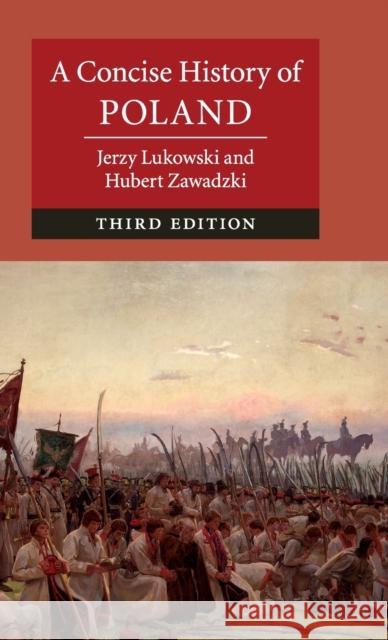
During the eighteenth century Europe's republics may have been an integral part of the international scene, but they were marginalised or in decline. When, in 1772, the Commonwealth of Poland-Lithuania suffered a massive loss of territory to its three more powerful neighbours, Russia, Prussia and Austria, Edmund Burke's question Poland was but a breakfast where will they dine?' was asked across the continent's lesser states, republics and non-republics alike. The slow, almost inevitable, process of Poland's digestion may have contributed to the relative ease with which that process was...
During the eighteenth century Europe's republics may have been an integral part of the international scene, but they were marginalised or in decline. ...
A history of the Polish Partitions - a subject which is as much concerned with the diplomatic history of late 18th-century Europe as a whole as the fate of an individual country.
A history of the Polish Partitions - a subject which is as much concerned with the diplomatic history of late 18th-century Europe as a whole as the fa...
The Partitions of Poland were a key event in the power politics of the late ancien regime, and had major long term consequences for the balance of power in northern and eastern Europe. Over a period of twenty five years Catherine II (Russia), Frederick II (Prussia) and Maria Theresa and Joseph II (Austria) between them wiped Poland xxx; Europe's second largest countryxxx; off the political map, and Poland disappeared as a state for 120 years. Jerzy Lukowski's new account, the first comprehensive study of the topic in English since 1915, sets the Polish dimension of this story in its wider...
The Partitions of Poland were a key event in the power politics of the late ancien regime, and had major long term consequences for the balance of pow...